






What IVDD actually is - and why dachshunds are prone to it
Four letters that follow this breed everywhere. Here's the calm version of what they mean.
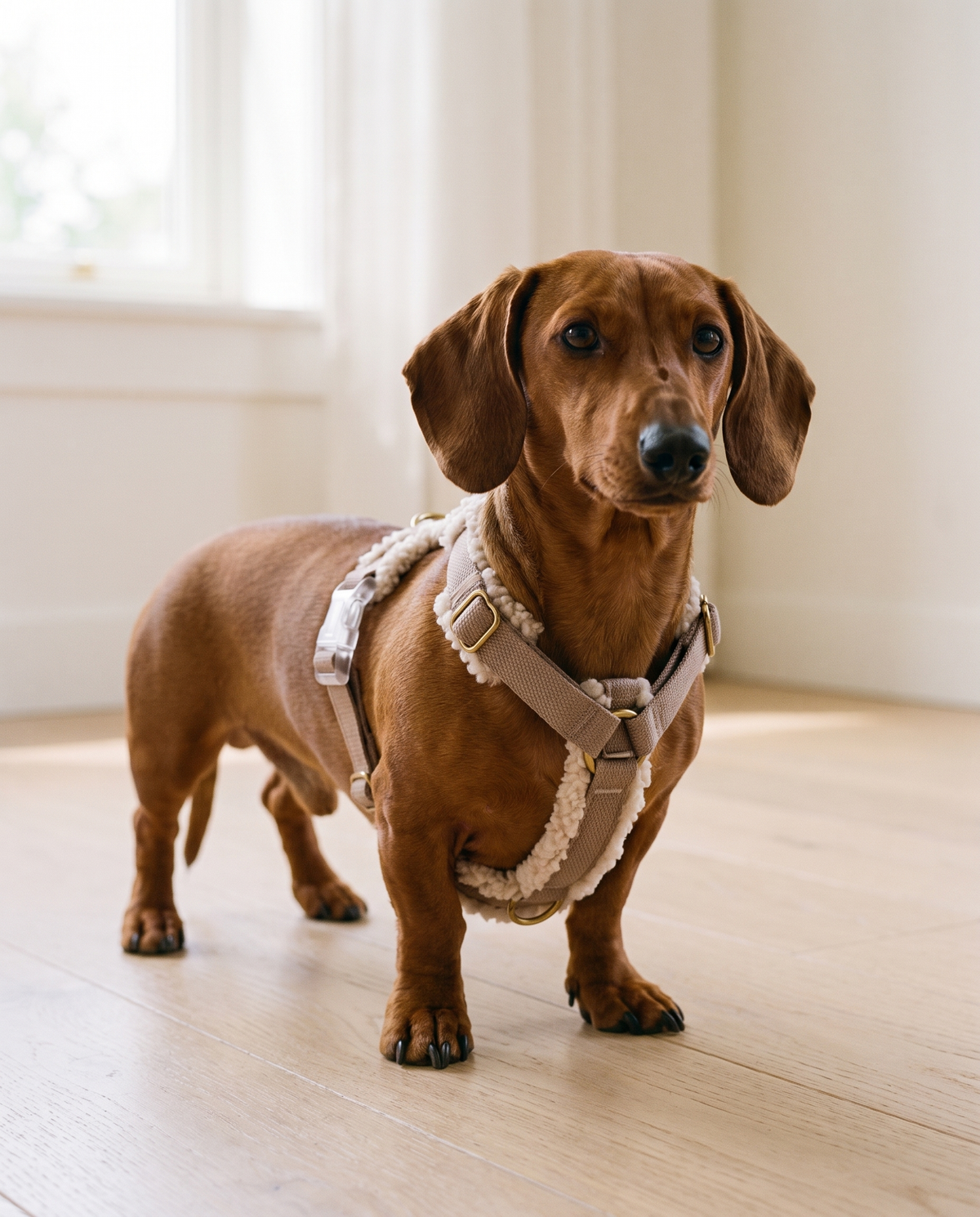
If you are choosing walking gear while you read this, the companion piece is how to choose a harness for a dachshund: the two measurements that decide the size, and what a harness can and cannot do.The short version
- IVDD is disc degeneration that, in some dogs, bulges or ruptures against the spinal cord.
- The breed's FGF4 retrogene ("CDDY") drives Type I IVDD - but in the largest US study, owners reported it in about 15 in 100 dachshunds, and daily life (not just genes) decides where you land.
- Genetics set the baseline; daily life shifts it - lean weight, load off the neck, softer landings, steady movement.
The disc, in one paragraph
Between each pair of vertebrae sits a disc - a fibrous ring with a gel core, the spine's shock absorber. IVDD (intervertebral disc disease) is what happens when discs degenerate and, in some dogs, bulge or rupture against the spinal cord. Depending on where and how hard, that ranges from pain to weakness to loss of leg function.
Once you know what IVDD is, the next question is the practical one: what does your dog's setup look like? Three questions, two minutes.
Why dachshunds, specifically
The same FGF4 retrogene ("CDDY") that gives the breed its long, low frame also makes disc cartilage mature abnormally and calcify early (Brown et al. 2017, PNAS). That's Type I IVDD - early degeneration, sometimes sudden rupture, typically presenting between ages 4-8. (Type II is the slower, older-dog version seen in larger breeds.) In the largest US study to date, dachshund odds ran about 13× a mixed-breed dog's (Wee & Nin 2025, JAVMA).
The two sentences that keep owners sane
About 15 in 100 dachshunds develop clinical IVDD - meaning most never do. And even a confirmed episode is not a death sentence.
In the largest US study, owners reported disc disease in about 15 in 100 dachshunds (JAVMA 2025: 83 of 541) - meaning most never do. And even a confirmed episode is not a death sentence: caught early and treated properly, most dogs do well. Which is exactly why the everyday setup earns its evening - it stacks both the "most never" and the "caught early" further in your favor.
What actually moves the odds
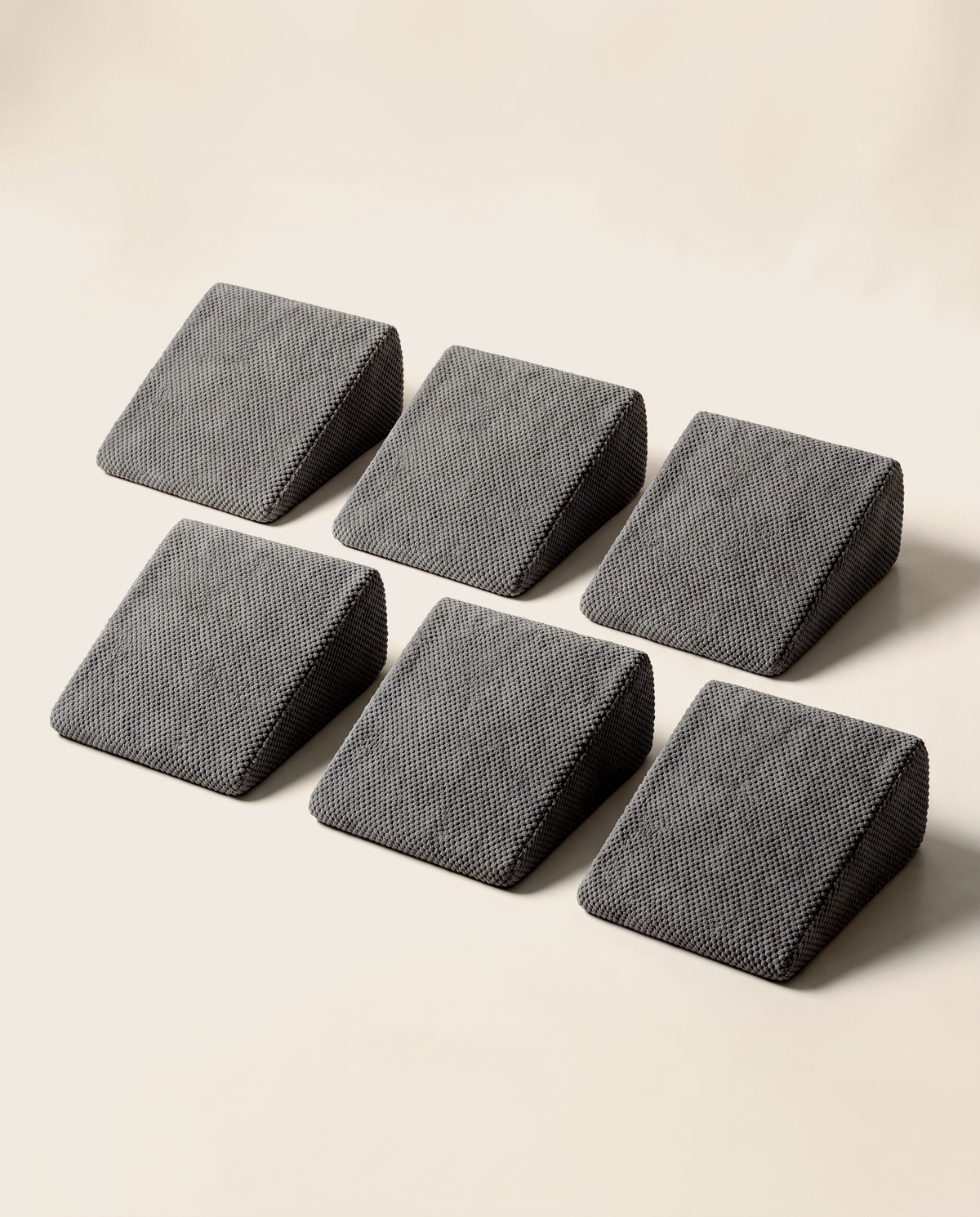
Genetics set the baseline; daily life shifts it. The evidence keeps landing on the same short list - lean body weight (the best-evidenced lever), leash load off the neck, softer landings off furniture, and steady movement that builds supporting muscle. That list is our entire catalog philosophy, and it's yours for free on the IVDD-ready home checklist.
Understanding IVDD - the complete evidence hub →
Keep reading: You tested positive for CDDY. Now what? · The real odds
Educational content only - not a substitute for veterinary care. Always consult your veterinarian.