Ramp or stairs for a dachshund?
Search this question and you will get a confident answer: a ramp. Gentler on the back, better for seniors, kinder to a recovering dog.
Household stairs are a separate question with its own arithmetic: how many stair wedges you need.
That answer is not wrong. It is just half an answer, and the missing half is the one that decides it in most homes.
We sell steps. The answer turns on two things, and only one of them is your dachshund. The other is your floor.
Why "a ramp" is the usual answer
The reasoning is sound. A ramp is one continuous surface, so a dachshund walks up it instead of hopping. Nothing has to be lifted. For a dog that cannot reliably pick its front legs up and place them, that is the difference between using the furniture and not.
The Cornell Riney Canine Health Center puts both in the same sentence when it lists what helps: "providing steps or ramps to reduce jumping on and off objects." Steps and ramps, together, doing the same job.
So the question is not which is better in the abstract. It is which one your dachshund will actually use, in the room you actually have.
The number nobody publishes
Here is what almost no product page will tell you: a ramp's gentleness is a function of its length, and gentle ramps are very long.
The arithmetic is simple. The slope is the furniture height divided by the ramp's run along the floor. For a sofa 18 inches high:
| Ramp length on the floor | Slope |
|---|---|
| 30 in | about 31 degrees |
| 40 in | about 24 degrees |
| 55 in | about 18 degrees |
| 70 in | about 14 degrees |
| 85 in | about 12 degrees |
A short ramp is a slide. That is why so many ramp reviews describe a dog getting halfway up and sliding back down, or refusing it outright after one bad trip. The ramp was not badly made. It was too short for the height it was asked to reach.
To be genuinely gentle, a ramp to an average sofa wants four to seven feet of floor in front of it. Permanently. Steps reaching a similar height take about two.
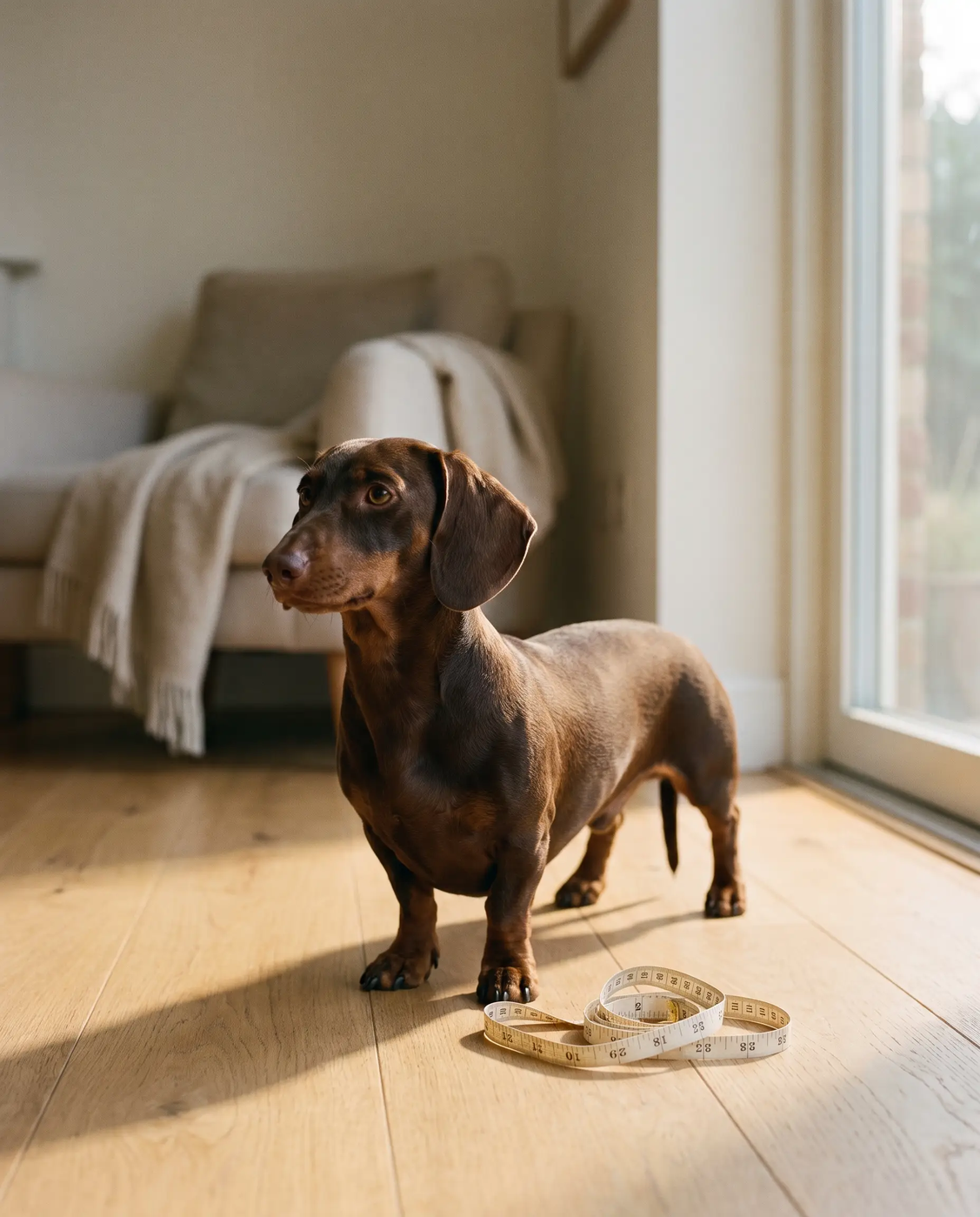
Measure the floor before you measure anything else. If that run does not exist in your living room, the honest answer is not a ramp.
When steps are the wrong tool
Steps ask for a small lift at every stage. Most dachshunds make that lift without thinking about it. Some cannot, and for them the question is settled before the tape measure comes out.
- A dachshund recovering from surgery, or with real weakness or advanced arthritis. If the front legs cannot be lifted and placed reliably, a continuous surface is the only thing that works.
- When your vet has said so. Their view of your dachshund beats anything on this page.
- Heights no step set reaches, like a car boot or a tall bed frame. That is a different piece of equipment entirely.
If that is your dachshund, the arithmetic above applies to you twice over: a slope that gentle needs even more floor, and it is worth measuring the room before anything else.
Where steps win
- Floor space. The common case. Most living rooms do not have four to seven spare feet in front of the sofa, and a ramp squeezed into two is steeper than the jump it replaced.
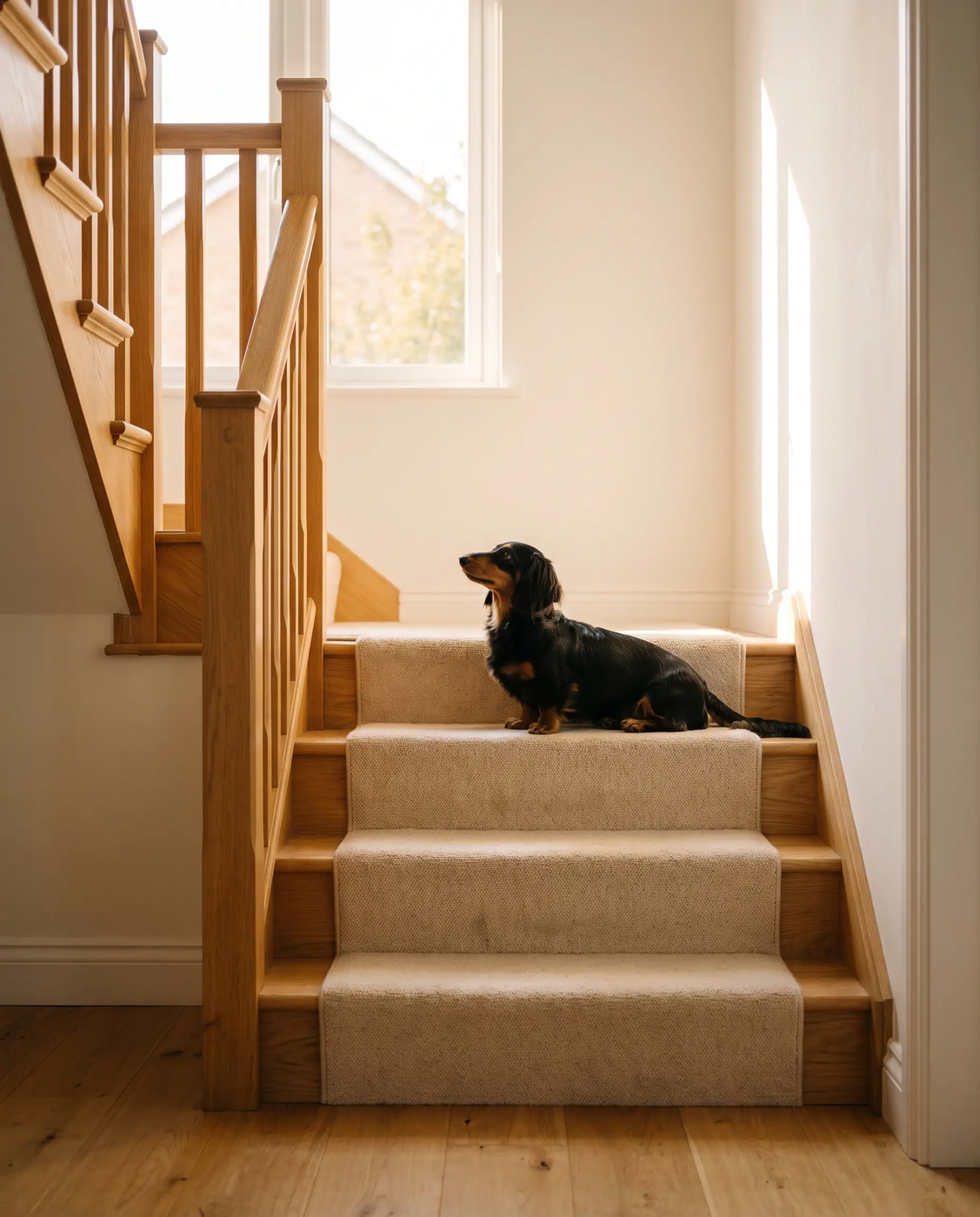
- A dog that already uses stairs. Most dachshunds do, every day. A step is a familiar movement; a ramp is a new one that has to be taught.
- Coming down. Descending is where ramps fail: it is one continuous slope, and if the surface gives at all under the paw, the dog slides the whole way. Steps break the descent into stages, and a slip is one stage, not the full height.
- Getting it used at all. A thing that fits where the jumping happens gets used. A thing stored against a wall because it blocks the room does not.
The five questions that actually decide it
- How high is the furniture? Floor to the top of the seat cushion, not to the arm. Write the number down.
- How much clear floor is in front of it? Now check that against the table above.
- Can your dachshund lift its front legs onto a step today? If no, it is a ramp.
- Does it use the stairs at home? If yes, steps will need almost no teaching.
- Where does the jumping actually happen? One sofa, one side of the bed. Put it there. Gear in the wrong room is not gear.
What we sell, plainly
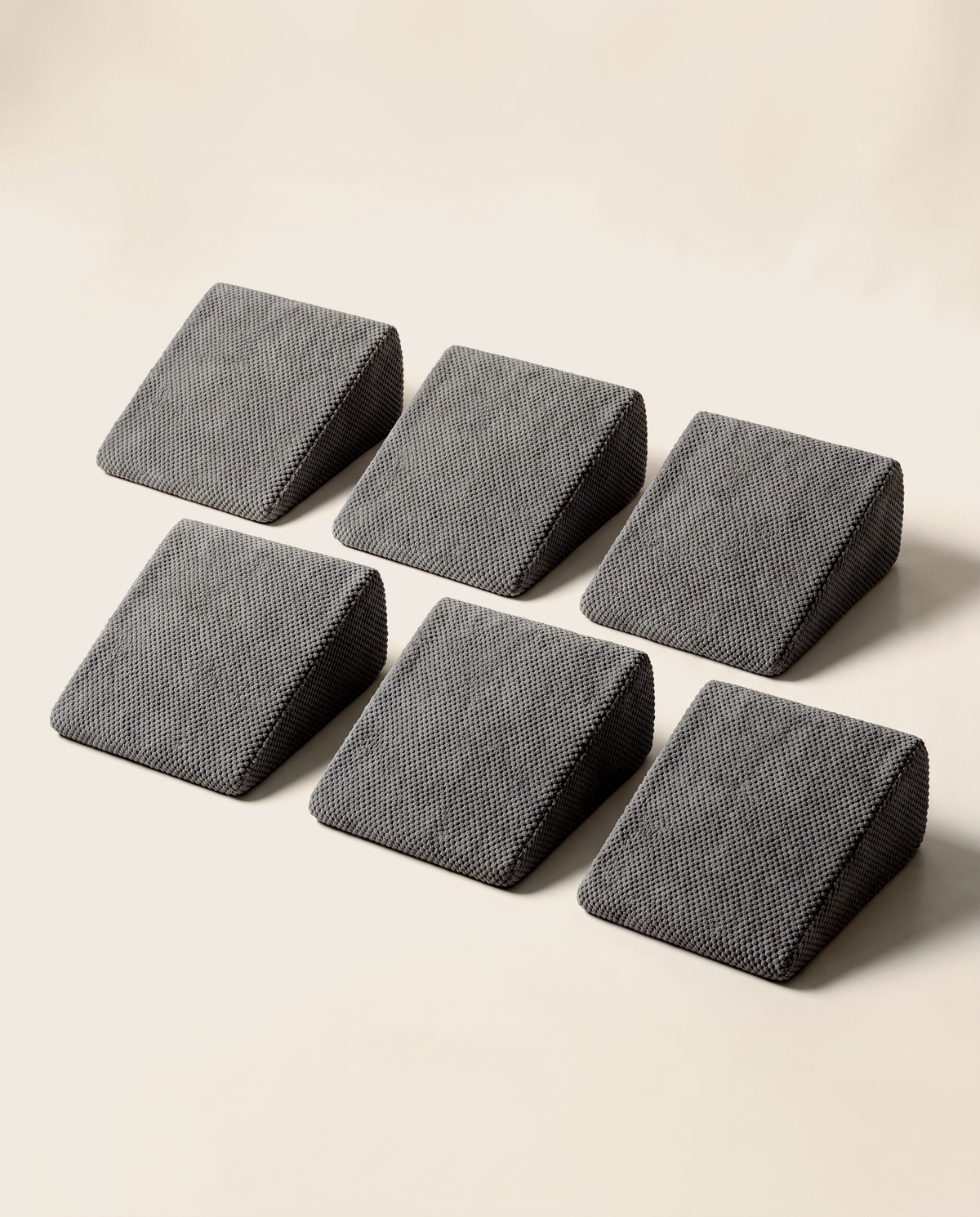
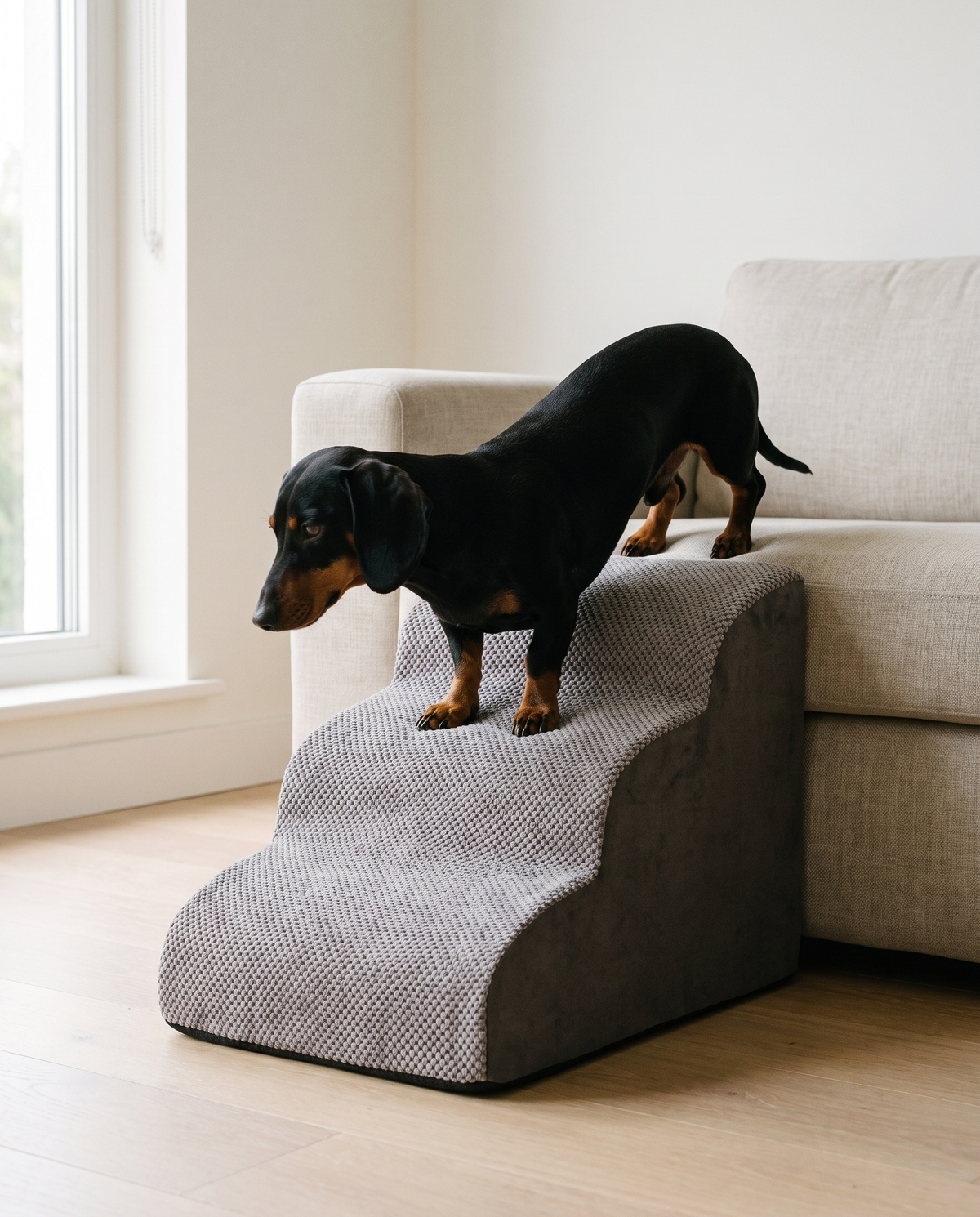
The Doxie Ramp is three foam steps. It is not a ramp - there is no slope and no ramp mode, and the name is a holdover we are stuck with for now.
It is 22.5 inches long, the top step stands at 15.7 inches, and it holds up to 40 pounds. The supplier rates it for furniture 16 to 22 inches high. Measure floor to the top of your seat cushion before you order: the closer that number is to 15.7 inches, the smaller the last step up, and beds are often taller than sofas.
What it does is straightforward, and it is not a medical claim: it turns one drop off the sofa into three short steps. No steps, ramp, bed or harness prevents, treats or reduces disc disease, and anyone telling you otherwise is selling you something. What changes is the height of the drop your dachshund takes, dozens of times a day, on the piece of furniture it already owns.
Measure your sofa, then see the steps
The other stairs question, the ones in your house, has a different and more surprising answer: stairs are not the enemy.
And the surface at the bottom of all of it: what size bed a dachshund actually needs, and why the size on the listing is not the size of the bed.