



Understanding IVDD
The education hub: what IVDD actually is, the honest odds, and the levers you own.
IVDD, honestly
About 15 in 100 - and what you can do about it
If you love a dachshund, someone has already scared you about their back. This page is the opposite of that: the actual numbers, the genetics behind them, and the short list of everyday levers the research says you own. No doom, no fluff.
The genetics
What IVDD actually is
IVDD - intervertebral disc disease - is what happens when the cushioning discs between vertebrae degenerate early and, in some dogs, bulge or rupture against the spinal cord. In dachshunds it traces to a specific gene variant (FGF4 retrogene on CFA12, the "CDDY" result on DNA tests) that's near-universal in the breed - the same variant that gives them the long, low silhouette.
A CDDY result is a breed baseline, not a prediction. Nearly every dachshund carries it; most still never develop clinical IVDD. Think of it the way doctors talk about family history: it tells you which odds to pay attention to - not what will happen to your dog.
The short list
The levers you actually own
The biggest studies point to weight and activity; the specialists add the neck and the hard landings. Everything we build maps to one of them.
1 · Keep them lean
The best-evidenced lever there is: overweight dachshunds carried meaningfully higher odds (OR 1.67, JAVMA 2025). Target a visible waist and ribs you can feel - your vet can show you a body-condition score in two minutes.
2 · Take the load off the neck
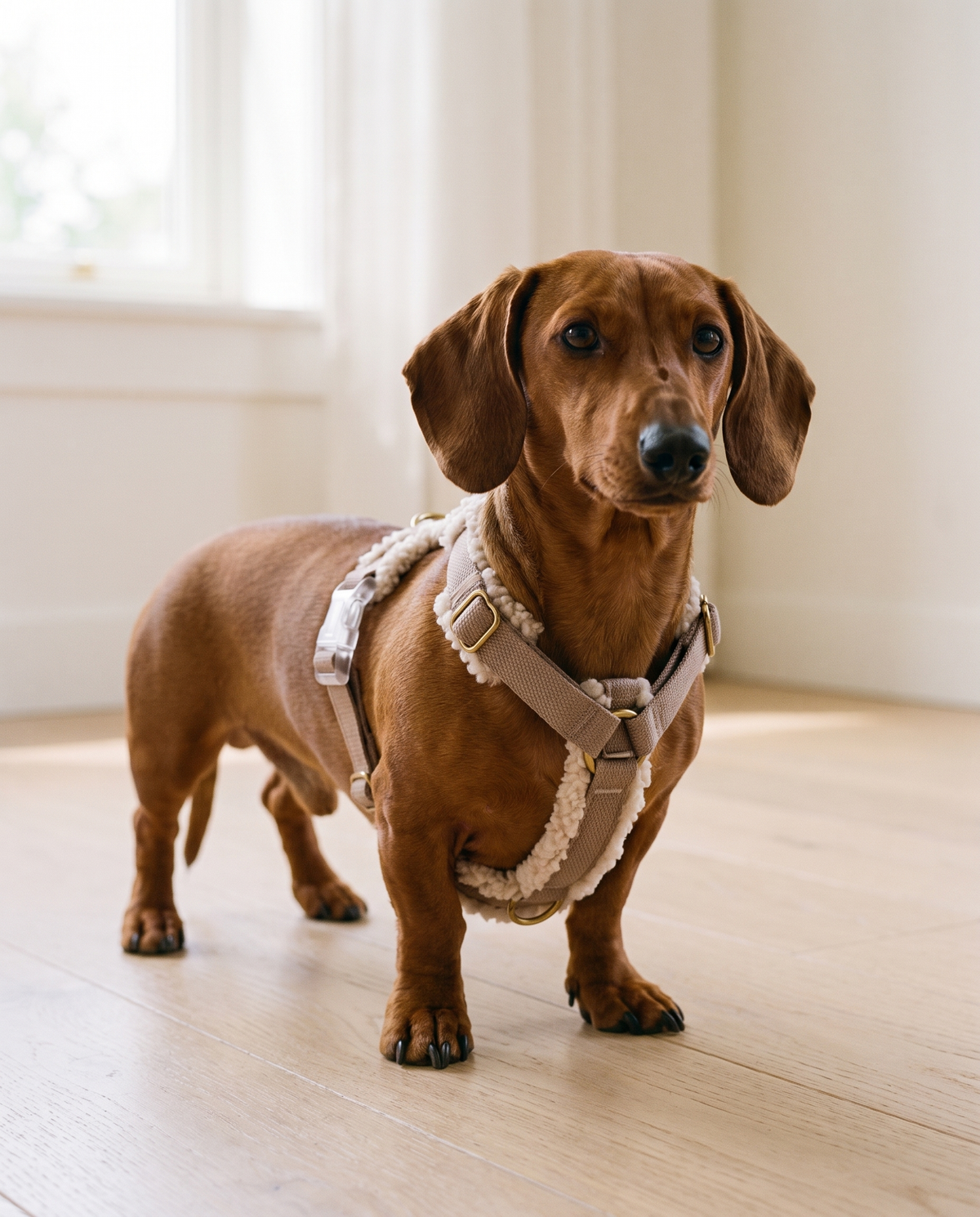
On a collar, every pull lands on the neck. A Y-front harness spreads that force across the chest. A board-certified veterinary neurologist answering dachshund owners on Dodgerslist gives this rule for walks: a harness, no neck leads.
Doxie Harness3 · Soften the landing
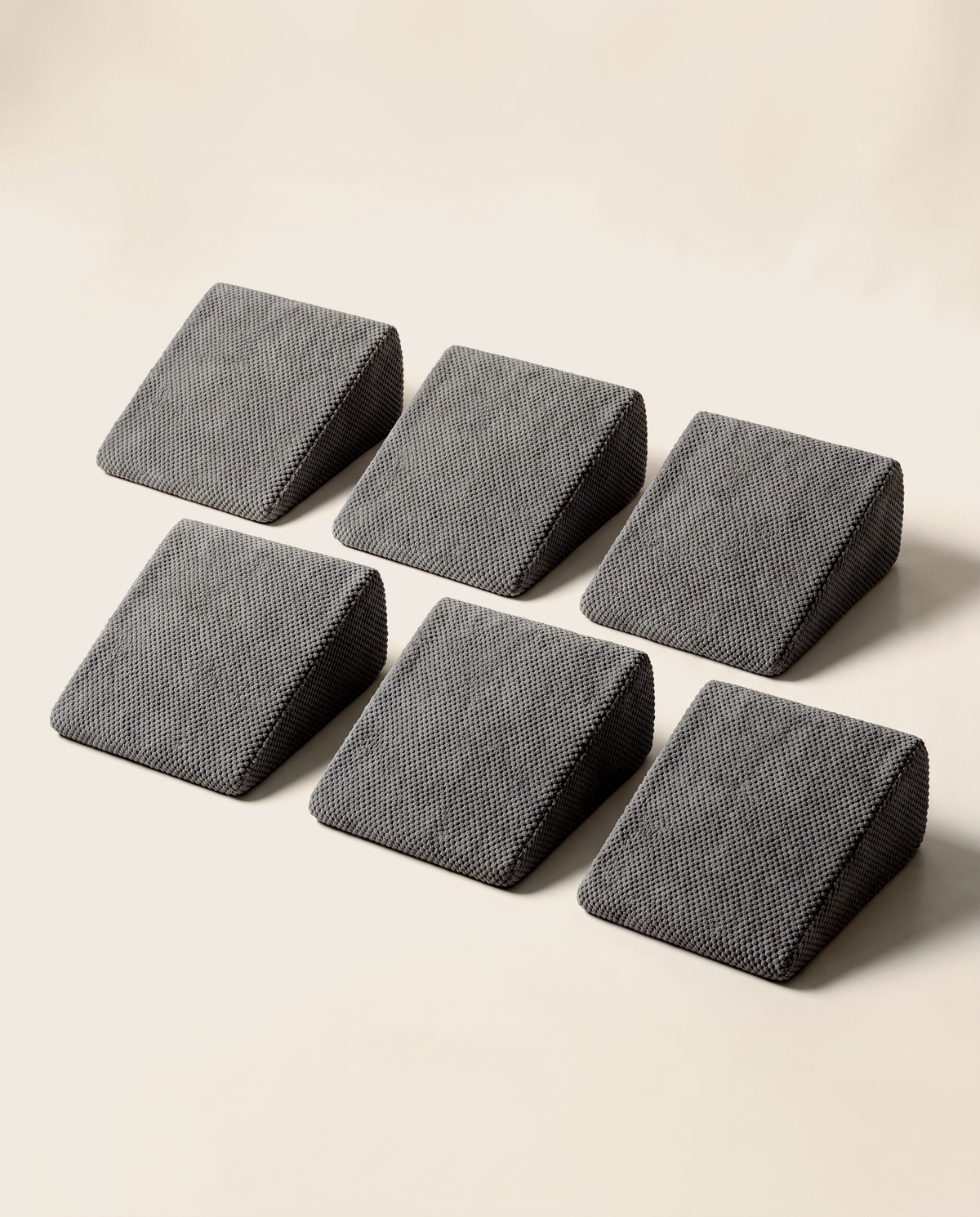
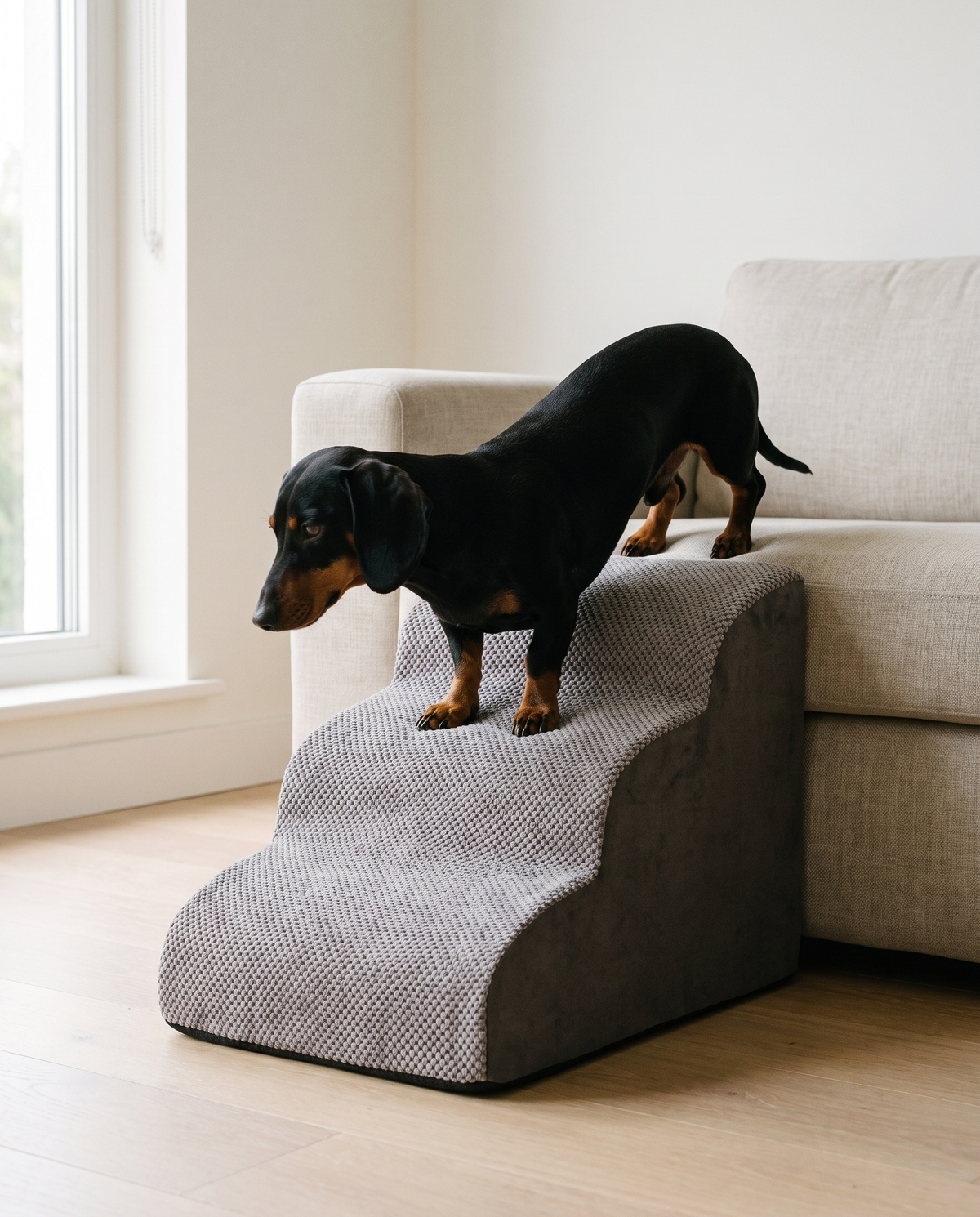
The repeated, jarring impact of launching off sofas and beds is the biomechanical concern the specialists keep naming. Ramps and eased steps keep the habit - and remove the impact.
The ramp and wedges4 · Let them move
Counter-intuitive and important: regular, controlled stair use was associated with lower risk - and active, well-muscled dachshunds fare better. Movement builds the muscle that supports the spine. Don't bubble-wrap the dog.
The other side of evidence-first
What you won't find here
Supplements. The community swears by glucosamine - but in the DachsLife cohort, supplemented dogs showed about twice the IVDD rate. The likeliest explanation is reverse causation (owners supplement dogs already struggling), yet the deeper point stands: no supplement has yet been shown to help dachshund discs. So we don't sell one. If that evidence arrives, our catalog will follow it - evidence-first has to work in both directions.
Fear. No paralysis-scare ads, no "your dog is a ticking time bomb." If a product needs panic to sell, it isn't good enough.
Know it early
The early signs worth acting on
Caught early, disc episodes are far more treatable - many dogs do well with conservative care. Move fast if you see:
- Reluctance to jump up or take stairs they normally take
- A hunched or arched back; a stiff, head-up "frozen" posture
- Trembling or shivering out of context
- Crying out when lifted or touched
- Wobbly rear legs, paws knuckling under, or sudden reluctance to walk
- Hiding away, off food, "just not themselves"
See a vet quickly - ideally one who can escalate to imaging. If signs look neurological, ask your vet about disc disease directly. And know this going in: even a confirmed episode is not a death sentence - most dogs, treated properly, return to a good life.
Receipts
The evidence we lean on
We grade our sources and say so when evidence is thin. The load-bearing studies behind this page:
- Wee & Nin 2025, JAVMA - Dog Aging Project analysis, 43,517 dogs (541 dachshunds): breed odds ~13×, overweight OR 1.67, and regular stair use associated with lower odds.
- Packer et al. 2015 ("DachsLife"), Canine Genetics & Epidemiology - 2,031 owners: lifetime prevalence ~15.7%, activity and lifestyle patterns.
- Brown et al. 2017, PNAS - the FGF4/CDDY retrogene behind chondrodystrophy and early disc degeneration.
- Dorn & Seath 2018, Canine Genetics & Epidemiology - neuter timing: early-neutered females ~2× relative risk; discuss timing with your vet.
Where we only have biomechanical rationale - like jump impact - we say that too, and claim nothing more.