


* Educational guidance based on your answers and published research. Not veterinary advice.
Let’s match your dachshund with the setup that fits
Three questions about your rooms, your routine and how your dachshund moves through the day. We match your answers to the published research and show you what fits, and why.
Your setup is ready
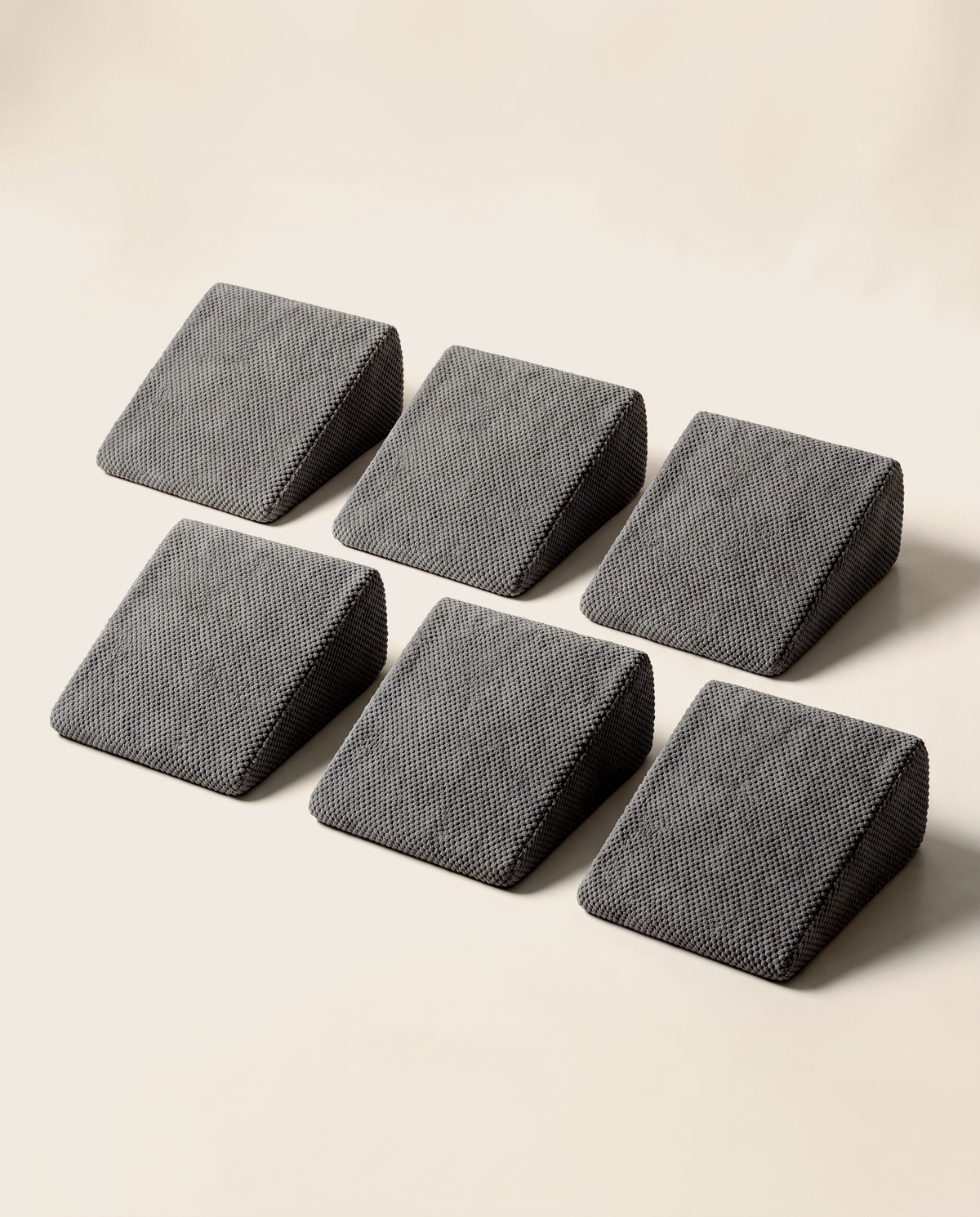
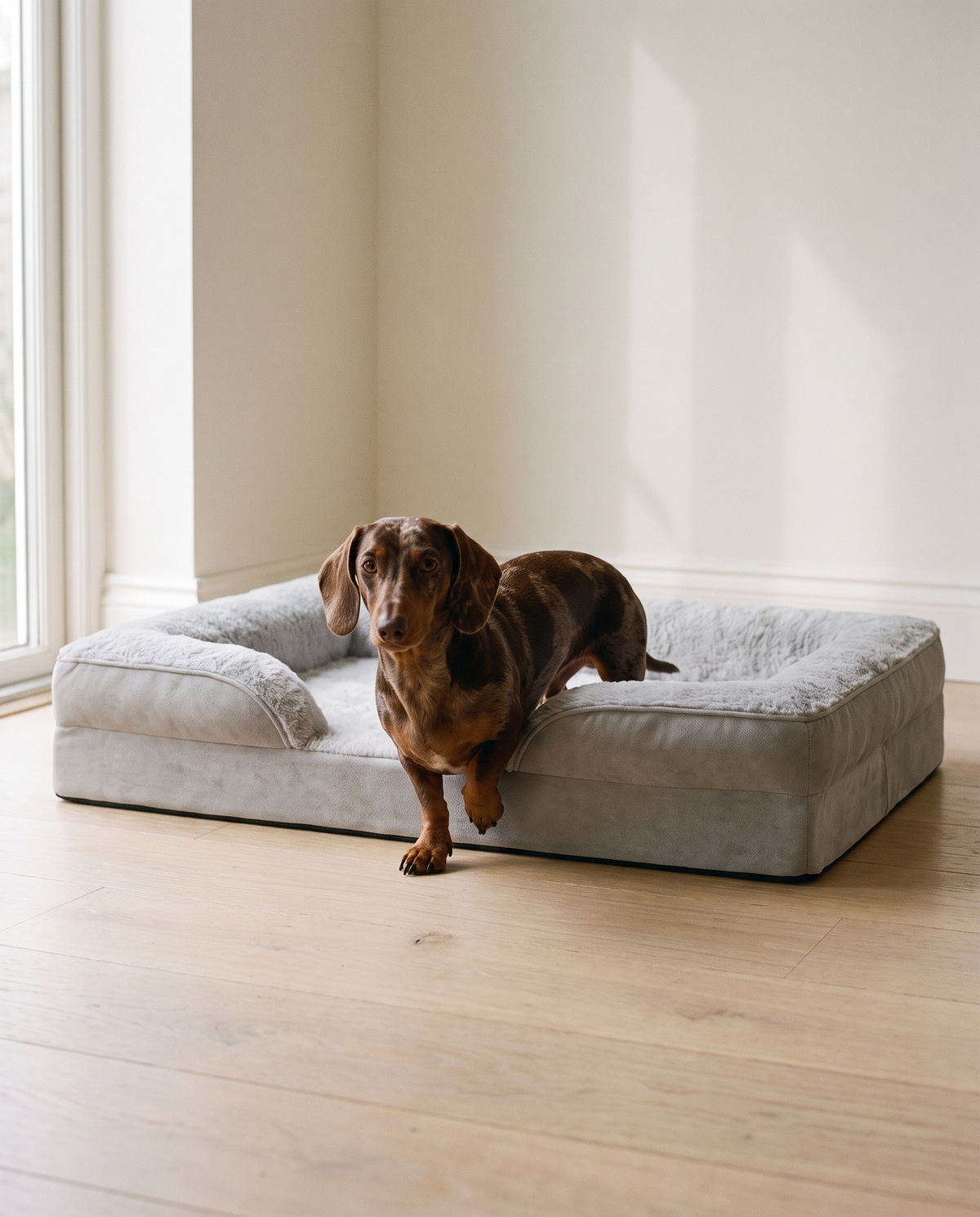
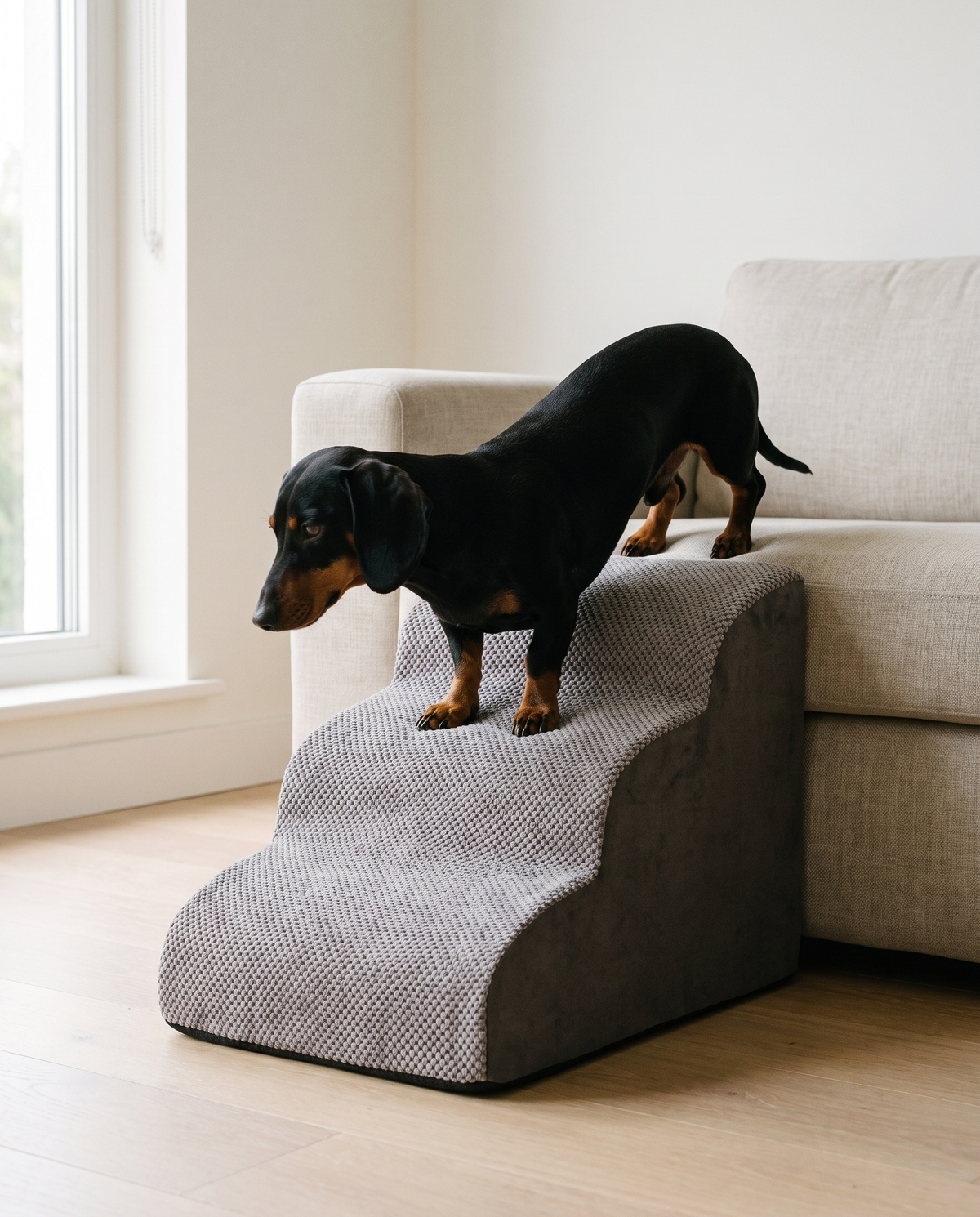
Your everyday essentials
- 10%2 items
- 15%3 items
- 20%4 items
What's included
- Free US shipping over $79
- 30-day quality guarantee
Educational guidance based on published research. Not veterinary advice.
Not ready to measure?
Answer two things and we will point you at a starting size.

Two measurements decide the size
Use a soft tape measure, with your dachshund standing.
- Chest. Wrap the tape around the deepest part of the chest, just behind the front legs. Snug against the coat, not tight.
- Neck. Wrap it around the base of the neck, where a collar sits, not up near the head.
No tape measure? Use a piece of string, mark where the ends meet, then hold the string against a ruler.
| Size | Weight | Chest | Neck |
|---|---|---|---|
| XS Mini | 6.5-11 lb | 13-15.5 in | 8.5-10.5 in |
| S Tweenie | 11-17.5 lb | 15-17.5 in | 10-12 in |
| M Standard | 15.5-24 lb | 16.5-20.5 in | 11-13.5 in |
| L Large | 22-33 lb | 19-23.5 in | 12.5-15 in |
The chest decides the size. Then check that the neck measurement falls inside the range for that size. Weight is only a starting point, because two dachshunds at the same weight can be built very differently.
Between two sizes? Take the one where your measurement sits nearer the middle of its range rather than at the edge. That leaves room to adjust in both directions.
What if the chest and the neck give different sizes?
This is the normal case for a dachshund, not the exception, and it is why a small-dog chart does not work on this breed. Go with the chest. The chest panel has to be the right shape to begin with; the straps adjust afterwards.
If the neck lands one size below the chest size, take the chest size and tighten the neck straps. If it lands one size above, take the chest size and let them out. More than one size apart in either direction, measure once more before you order - a tape that slipped or a thick winter coat will do it.
How to check the fit when it arrives
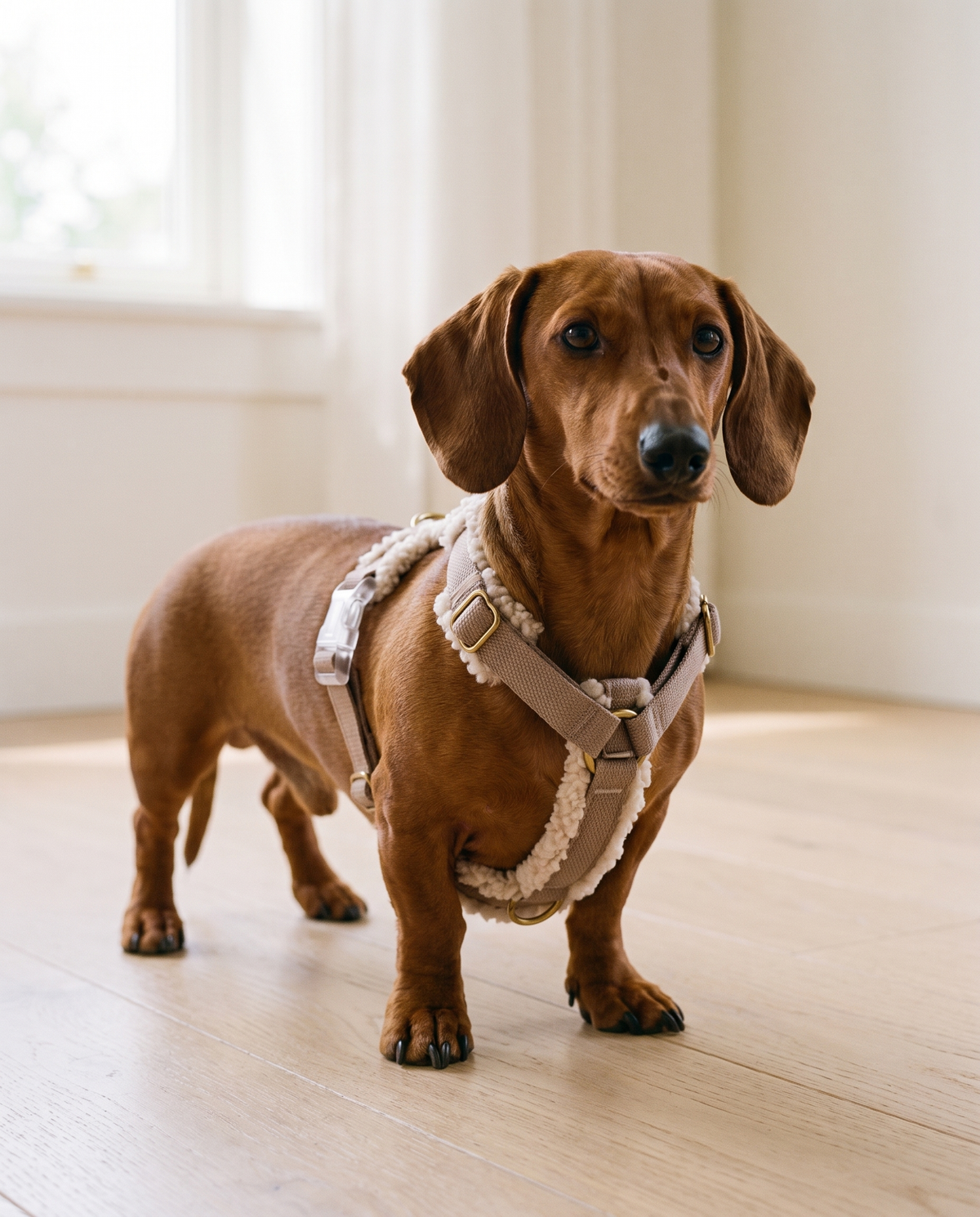
Put it on with your dachshund standing, then check three things:
- Two fingers slide flat under the neck band and under the chest strap. If two will not go in, it is tight. If your whole hand goes in, it is loose.
- The belly strap sits behind the elbows, not up in the armpit, where it rubs on every stride.
- The Y sits on the breastbone, centred in front of the chest, not off to one side.
Walk a few minutes and check again. Webbing settles once the coat flattens under it.
How to choose a harness for a dachshund goes through the five fit failures that only show up after a week.