
Article: What size bed does a dachshund need?
What size bed does a dachshund need?
Measure the shape your dachshund already makes when it is asleep, then match that to the bed's sleep surface, not to the size on the listing. Those are two different numbers, and the gap between them is why so many dachshunds end up hanging off a bed that was supposed to fit.
Here is the whole method, and the four other things that decide whether a bed gets used or ignored.
Why the size on the listing is not the size of the bed
A bolstered bed is sold by its outside dimensions. The bolster is the raised edge running around it, and on most beds it runs around three or four sides at two to four inches thick.
So a bed advertised as 30 inches long has a bolster at each end. What is left in the middle, the flat part your dachshund actually lies on, is several inches shorter than 30. On our own bed, 30 inches on the outside is 24 inches of sleep surface. Six inches of the advertised length is edge.
That is not a trick. It is geometry, and it applies to every bolstered bed made. But it means a breed guide that tells you "get a 30 inch bed" has told you almost nothing, because two 30 inch beds can differ by five inches of usable length depending on how thick the sides are.
What to do with that: look for the inner measurement. Good listings publish both. If a listing gives you only one set of numbers, those are the outside, and you can estimate the inside by subtracting roughly twice the bolster thickness from the length and from the width.
How to measure your dachshund, in about a minute
Every guide tells you to measure nose to tail while your dachshund is standing. That number is not wrong, it is just not the number you need, because dogs do not sleep standing up.
Measure the shape it already makes.
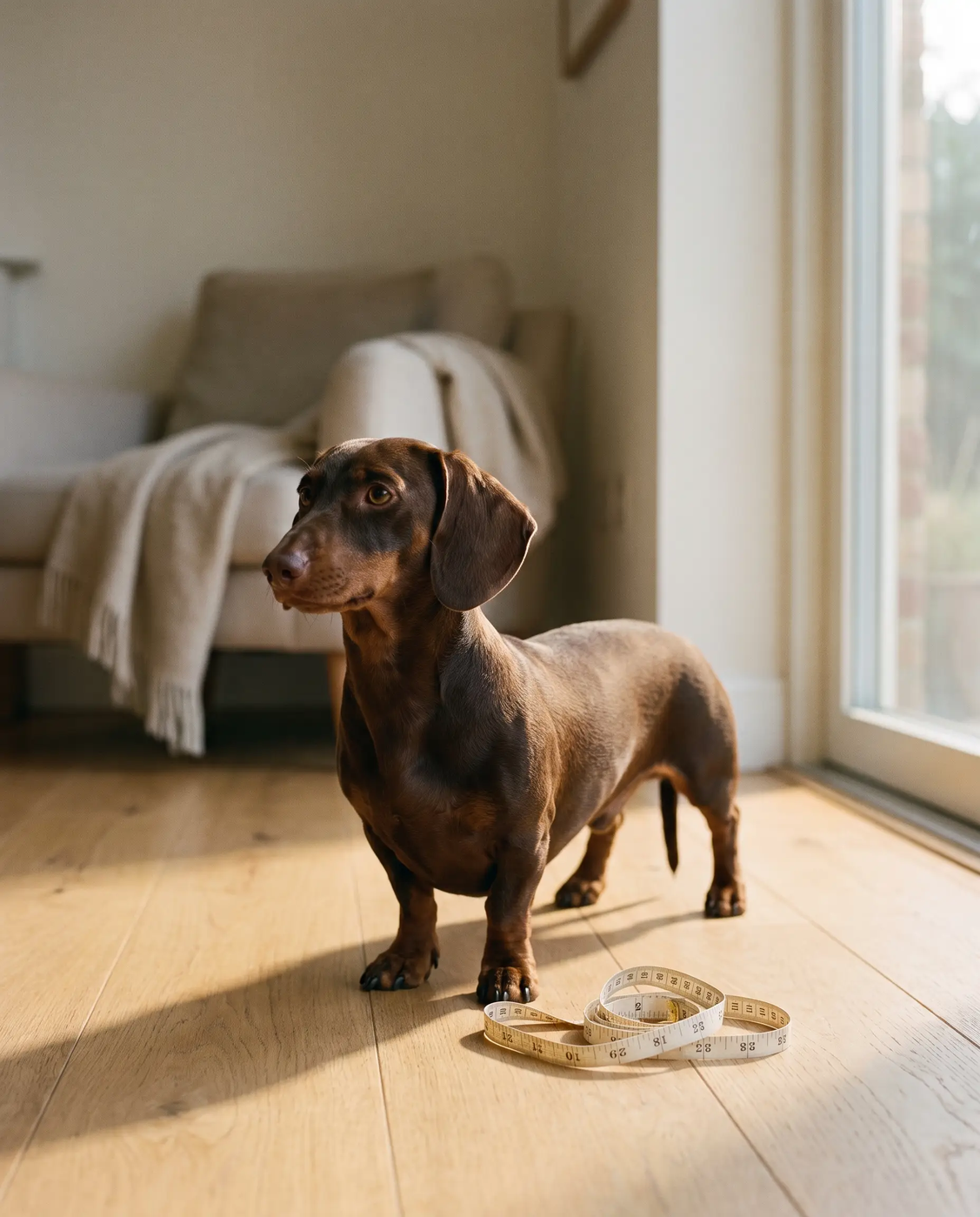
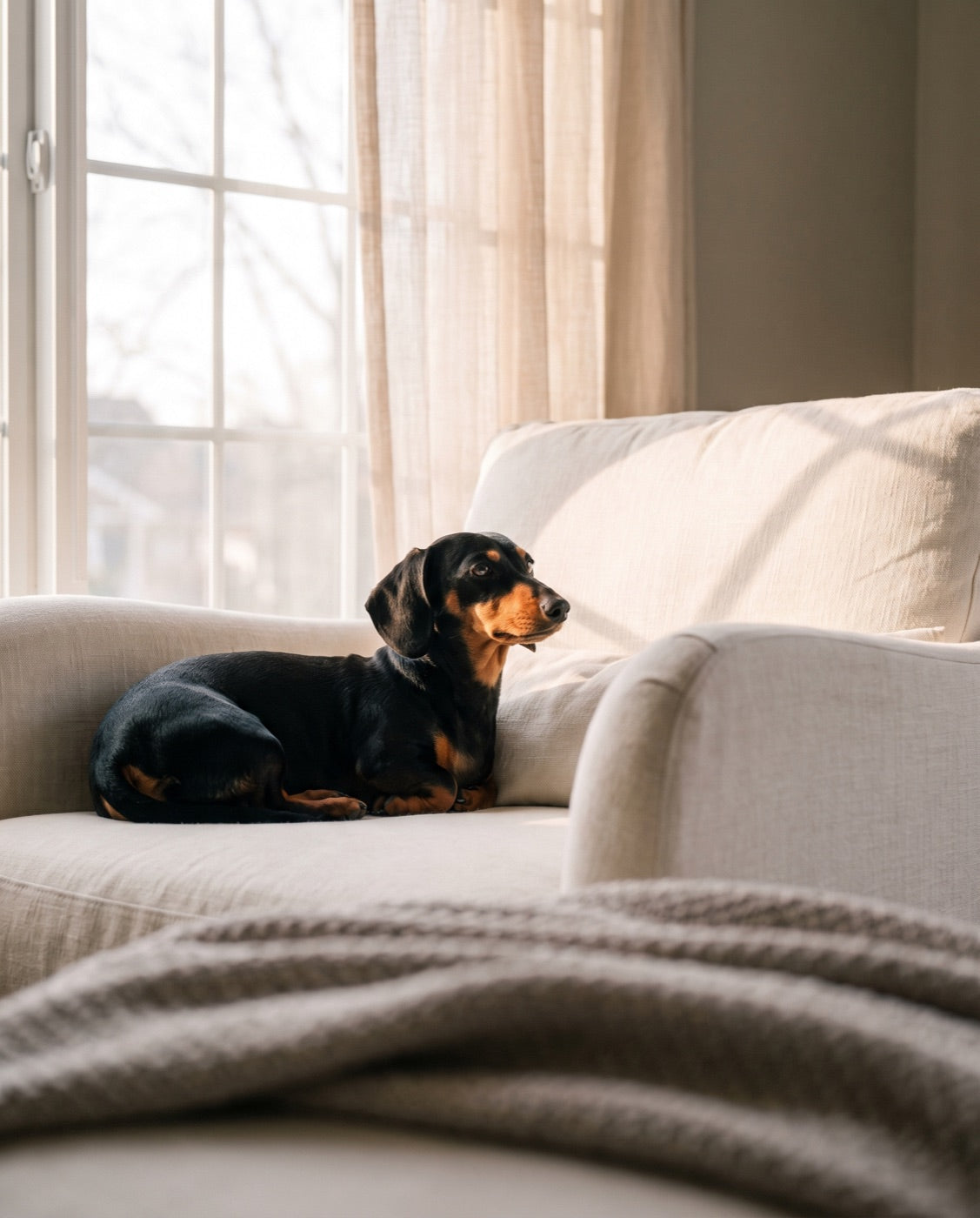
Go and look at where your dachshund sleeps right now: your couch, your bed, the current dog bed, the corner of the rug. Take a tape measure to the space it is taking up.
- Measure it curled. Most dachshunds curl for part of the night. Take the longest line across the curl.
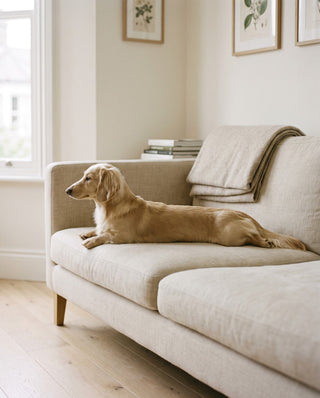
- Measure it stretched out. This is the one that gets missed. A dachshund flat on its side with the legs extended takes up far more length than its back does. Catch it in that position once and measure from the front paws to the back paws.
- Take the bigger of the two. That is your minimum sleep surface. Not your minimum bed size.
This costs nothing, it needs no breed chart, and it is exact for the dachshund you actually own, which no roundup can be. Two dachshunds at the same weight can sleep in shapes four inches apart.
A worked example. A dachshund measuring 18 inches from the base of the neck to the base of the tail will usually need around 24 inches of surface once the legs and head go out. A 24 x 16 in sleep surface takes that with room at both ends. A bed with 24 inches on the outside would not.
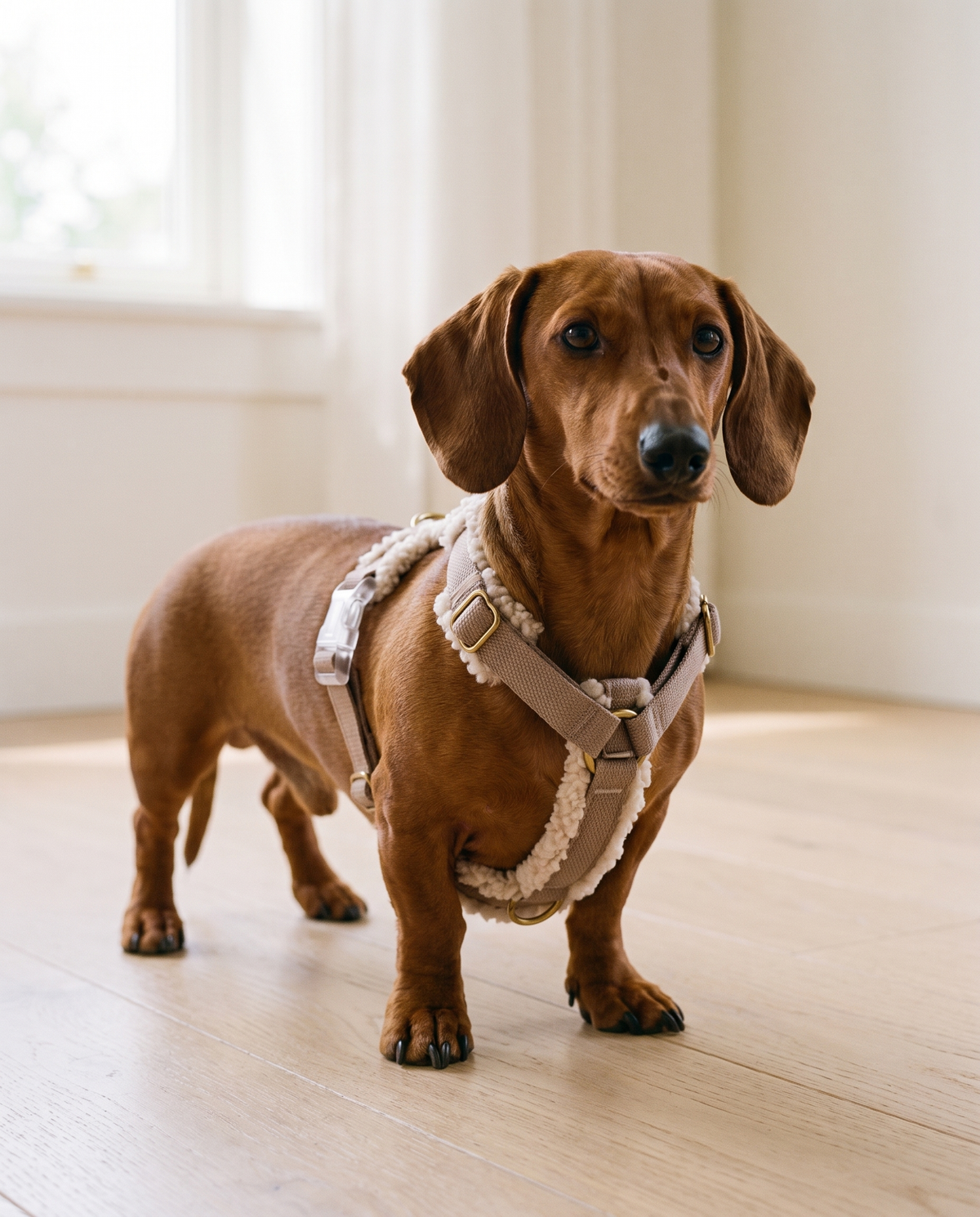
It is the same principle that decides a harness: measure the dog, because weight decides nothing.
Why length matters more for this breed than for most
A round dog that sleeps curled is well served by a round bed. A dachshund is a long dog that alternates between curled and flat out, and the flat-out position is the one that gets designed away.
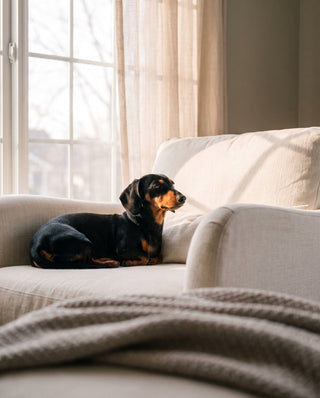
When a bed is too short, the body does not stop at the edge. The back end stays on the cushion and the head and front legs drape over the bolster, or the reverse. The long back is then supported in the middle and unsupported at one end, which is the position owners describe as hanging off it.
That is the complaint that drives a second bed purchase, and it is a sizing failure, not a quality failure. The bed was fine. It was short.
Cave bed or open bed, for a burrower?
This is the fork that decides whether the bed gets used at all, and the roundups do not name it.
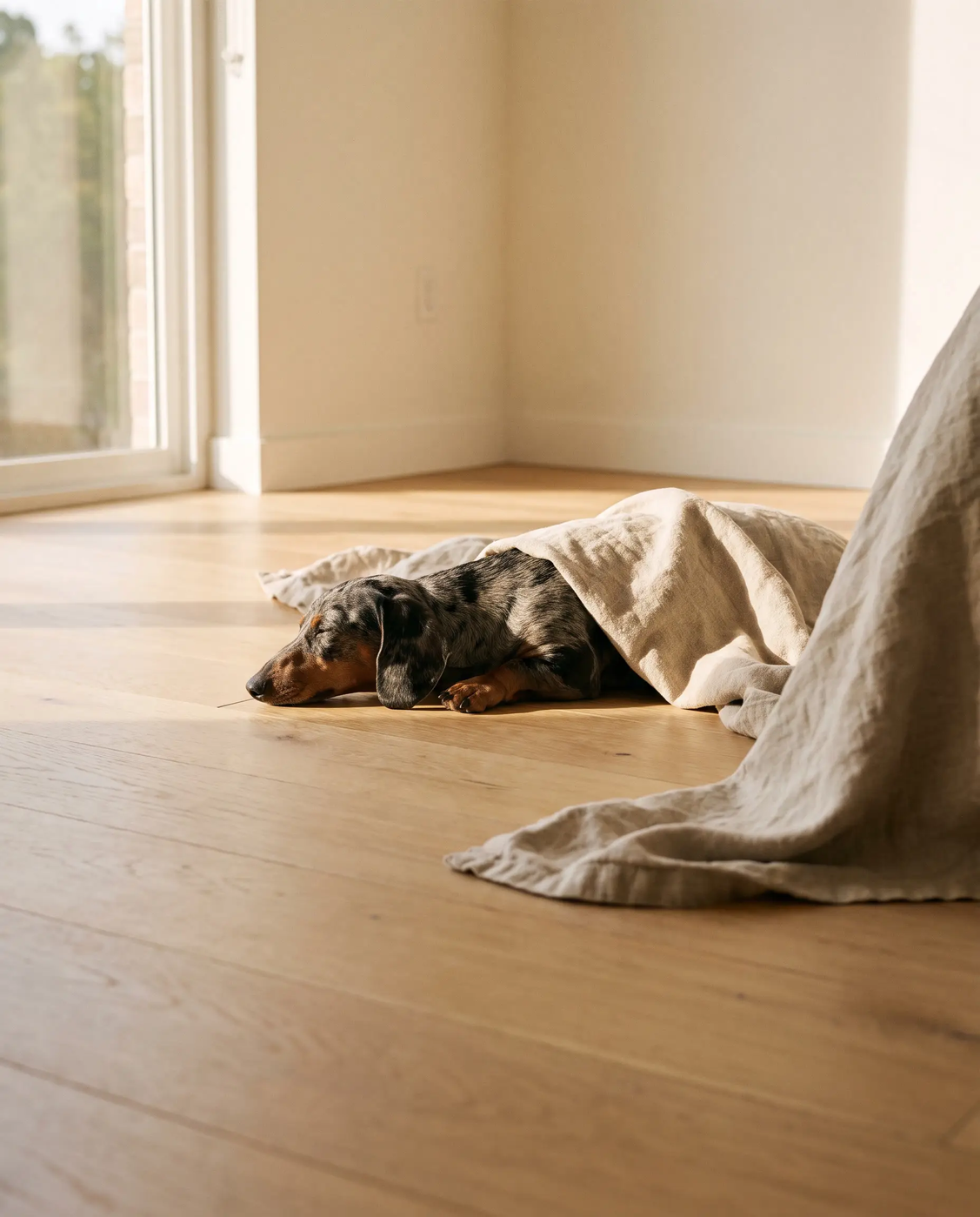
Dachshunds were bred to go down holes, and many of them sleep tunnelled: under a blanket, under a cushion, under the duvet with you. If yours does that, an open bed on its own can sit unused in the corner for a month.
The two options solve different problems:
- A cave or hooded bed gives the tunnel, and a burrower will go straight in. The trade is length and entry. A hooded bed is usually short, because the hood has to sit over a curled dog, and the opening has a lip to climb rather than a low edge to step over.
- An open bed gives the full stretched-out length and a low entry, and on its own it gives a burrower nothing to get under.
The fix is a blanket. Lay a throw over the surface of an open bed and a burrower will take it under. What the instinct wants is something over the back, not a fixed roof, and a loose blanket gives that while leaving the full length available on the nights it stretches out instead.
If your dachshund burrows every single night and never stretches out, buy for the burrow. If it does both, which is most of them, an open bed with a blanket covers both and a hooded bed covers one.
How high should the sides be?
Low at the front, and the front is the side that matters.
A bolster is genuinely useful. Dachshunds lean, and a raised edge gives something to press a back or a head against. The problem is when that edge runs the whole way around, because then every entry and exit is a climb over a wall, several times a day, by a dog with short legs and a long back.
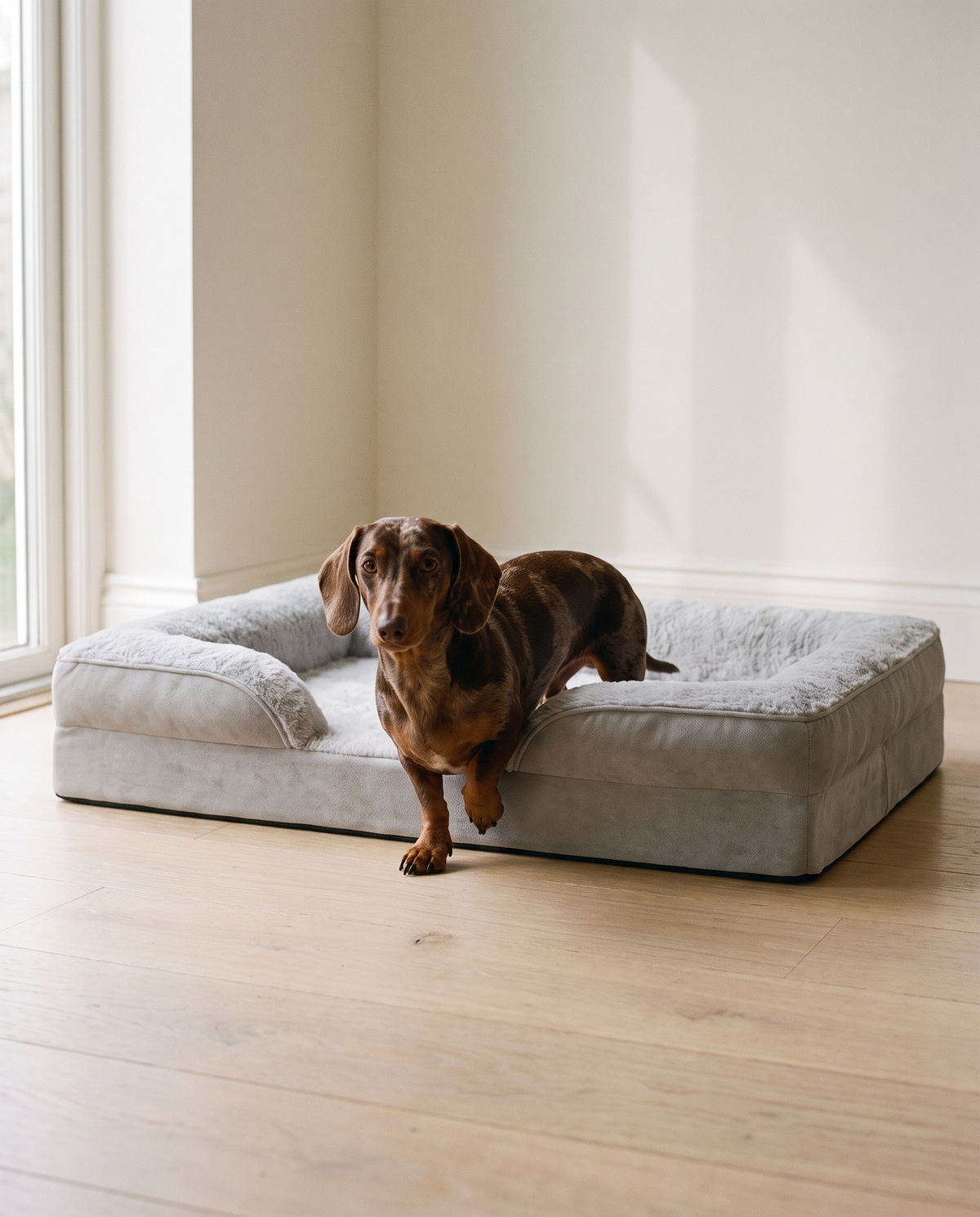
Look for a three-sided bolster with the front left open and low. Support on the sides to lean into, a low front to step over instead of climb.
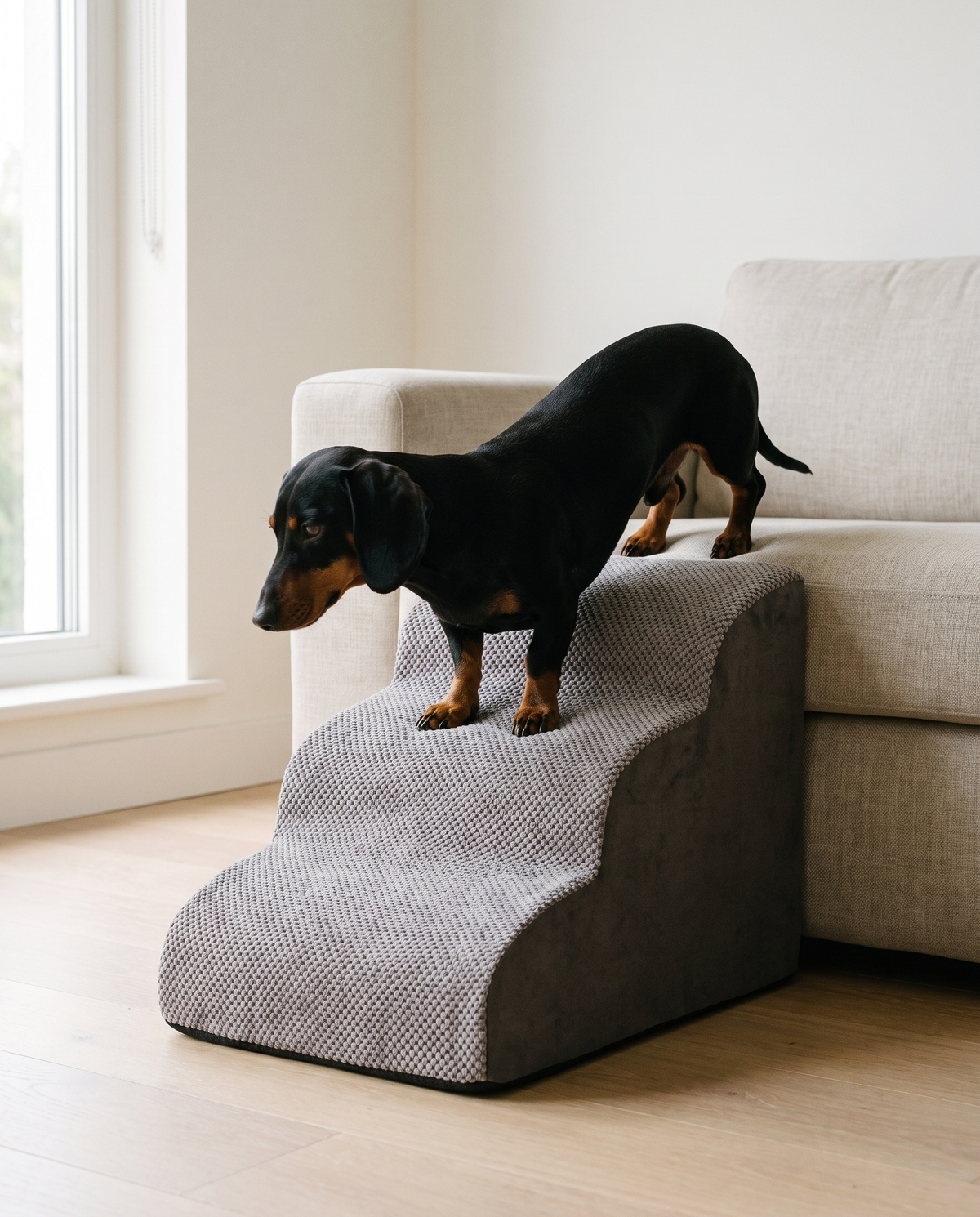
And one more thing about height: a floor bed is the one surface in the house with no drop off it. Everything else a dachshund sleeps on, the couch and your bed, has a landing at the other end. That is a point in favour of having a good floor-level option, separate from anything to do with the foam, and it is the same question that ramps and steps answer for the furniture.
Does "orthopedic" mean anything on a dog bed?
Sometimes. There is no standard a pet bed has to meet before the word goes on the label, so the word alone tells you nothing. What it describes when it is doing real work is the foam, and that you can check.
Solid foam versus shredded foam. A solid slab of memory foam holds a level surface and spreads weight across the whole body. Shredded or chopped foam, which is cheaper and is also sold as orthopedic, starts level and then migrates: it packs down where the dog lies most and piles up where it does not, so within a few months there is a dip under the ribs and a ridge everywhere else. For a long back, a dip in the middle is the specific thing you were trying to avoid.
How to tell which you are looking at. The listing will say, and if it does not, that is informative in itself. Look for "solid", "single slab", or a stated foam thickness. Shredded-fill beds usually describe a plush filling, or advertise that you can add or remove filling.
A bed is comfort equipment, not medical equipment. What it decides is the surface your dachshund sleeps on, and for a long back that surface is either level or it is not.
What about spills, and washing it?
Ask one question of any bed you are considering: what stops a spill at the cover?
On most beds, nothing does. The cover comes off and goes in the machine, the liquid goes straight through into the foam, and foam does not dry. That is where the smell complaints in this category come from, and it is why the honest answer to "is this waterproof" on a lot of product pages is simply no.
What you want is a waterproof inner liner: a separate layer between the cover and the foam, so the cover takes the mess and the foam stays dry.
Be precise about what that is, because the words get used loosely. A waterproof inner liner is not a waterproof bed. The outer cover is fabric and it will soak through; the liner is what stops the spill before the foam. And check how the cover comes off, because a cover with a zip along the bottom comes off in one piece, without wrestling the foam through a side opening.
Where our bed lands, and who it is not for
The Doxie Orthopedic Bed is 30 x 20 x 6 in overall, with a 24 x 16 in sleep surface: solid memory foam, a three-sided bolster with a low open front, a waterproof inner liner between the cover and the foam, a removable cover with a bottom zip, and a non-slip base. Rated to 35 lb. It ships vacuum-packed. One size, $99.
One size is a deliberate call rather than a gap. 35 lb is above the top of every dachshund weight band, and the sleep surface takes a stretched-out standard with room at both ends, so a second size would be a roomier bed rather than a bed for a bigger dachshund.
Where it is not the right answer:
- Your dachshund is over 35 lb. That is outside every breed band, so it is a mix, or a weight conversation rather than a bed conversation.
- Your dachshund burrows every night and never stretches out. Buy for the burrow.
- You want a bed to sit on the couch or on your own bed. This is a floor bed, and putting a floor bed on furniture reintroduces the climb it was meant to remove.
The checklist
Before you buy any dachshund bed, from us or from anyone:
- Measure the shape your dachshund makes asleep, stretched out, not standing.
- Find the bed's sleep surface, not its outside dimensions.
- Check that the sleep surface is at least as long as your stretched-out measurement.
- Solid foam, not shredded.
- A low, open front, with the bolster on the other three sides.
- Something that stops a spill before it reaches the foam.
- If your dachshund burrows, plan for a blanket on top.
The measuring is the part nobody does and the part that decides it. It takes a minute, and it is the difference between a bed that gets slept on and a bed that gets walked past.
No bed, ramp, wedge or harness prevents, treats or reduces disc disease. What a bed changes is the surface your dachshund lies on for most of the day, and whether the whole length of the back is on it.