
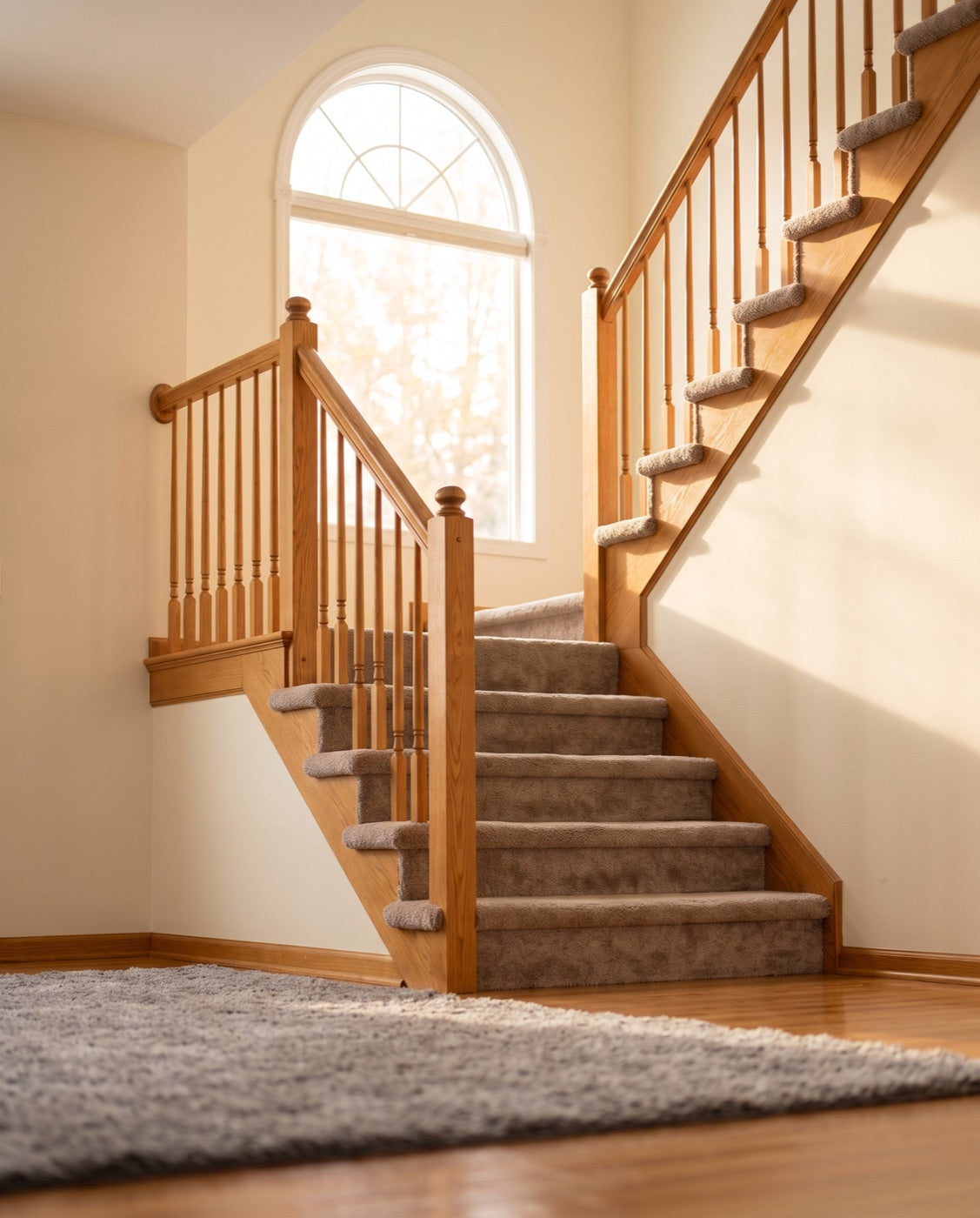
Stairs aren't the enemy: what the biggest study actually found
Ask a dachshund forum about stairs and you'll hear one answer: never. Ask the largest dataset we have, and you get a different one.
If you would rather soften the steps than block them: how many stair wedges a staircase actually takes, and whether they fit yours.
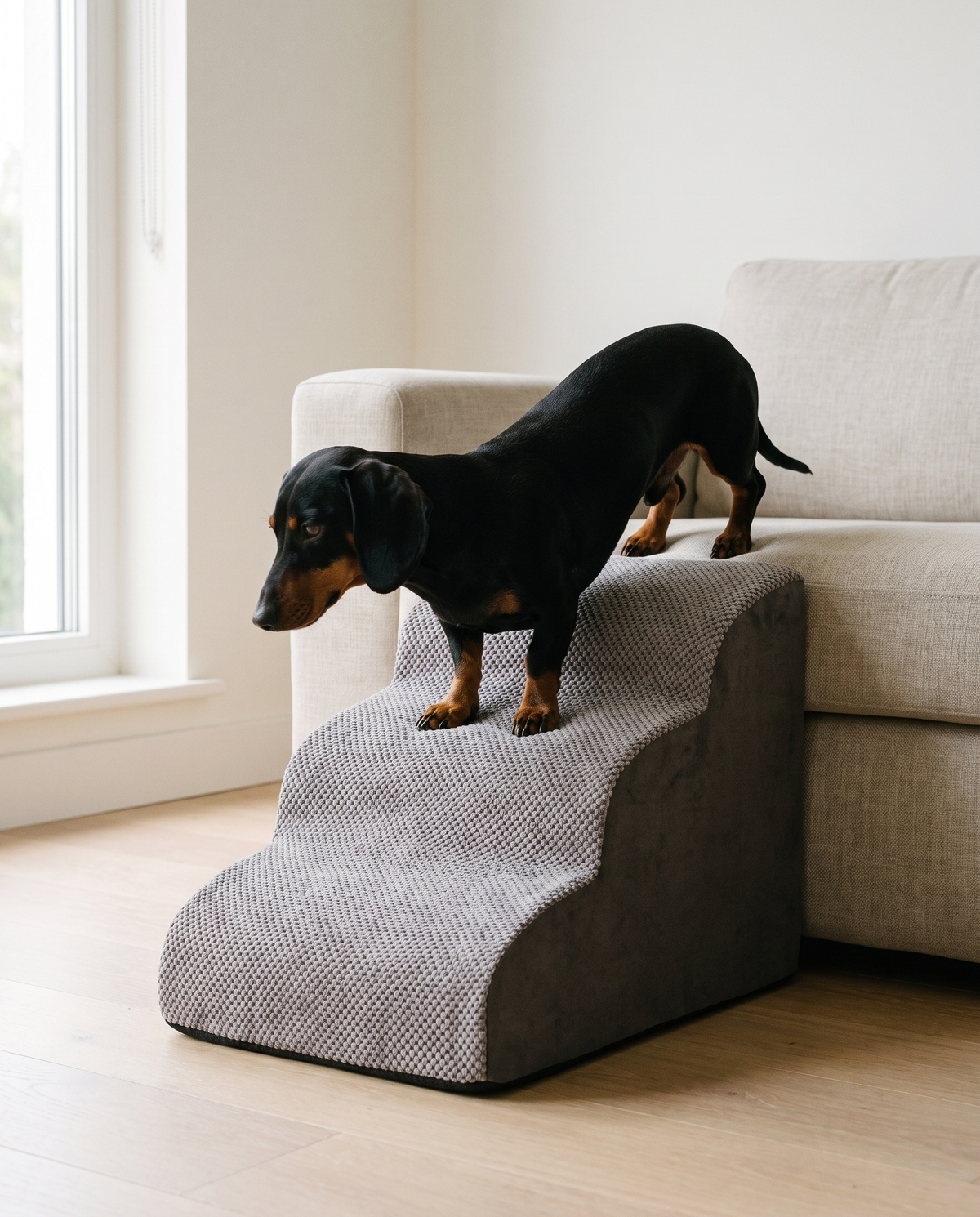
Furniture is the other half of this question, and it has a different answer: ramp or stairs for a dachshund, including how much floor a ramp really needs.
The short version
- In the largest study we have, regular, controlled stair use was tied to lower IVDD risk - not higher.
- The concern was never stairs; it's impact - bounding descents, leaps, hard landings.
- Ease the grade and solve the tall couch-and-bed drop; keep the calm daily movement that builds spine-supporting muscle.
The finding nobody expects
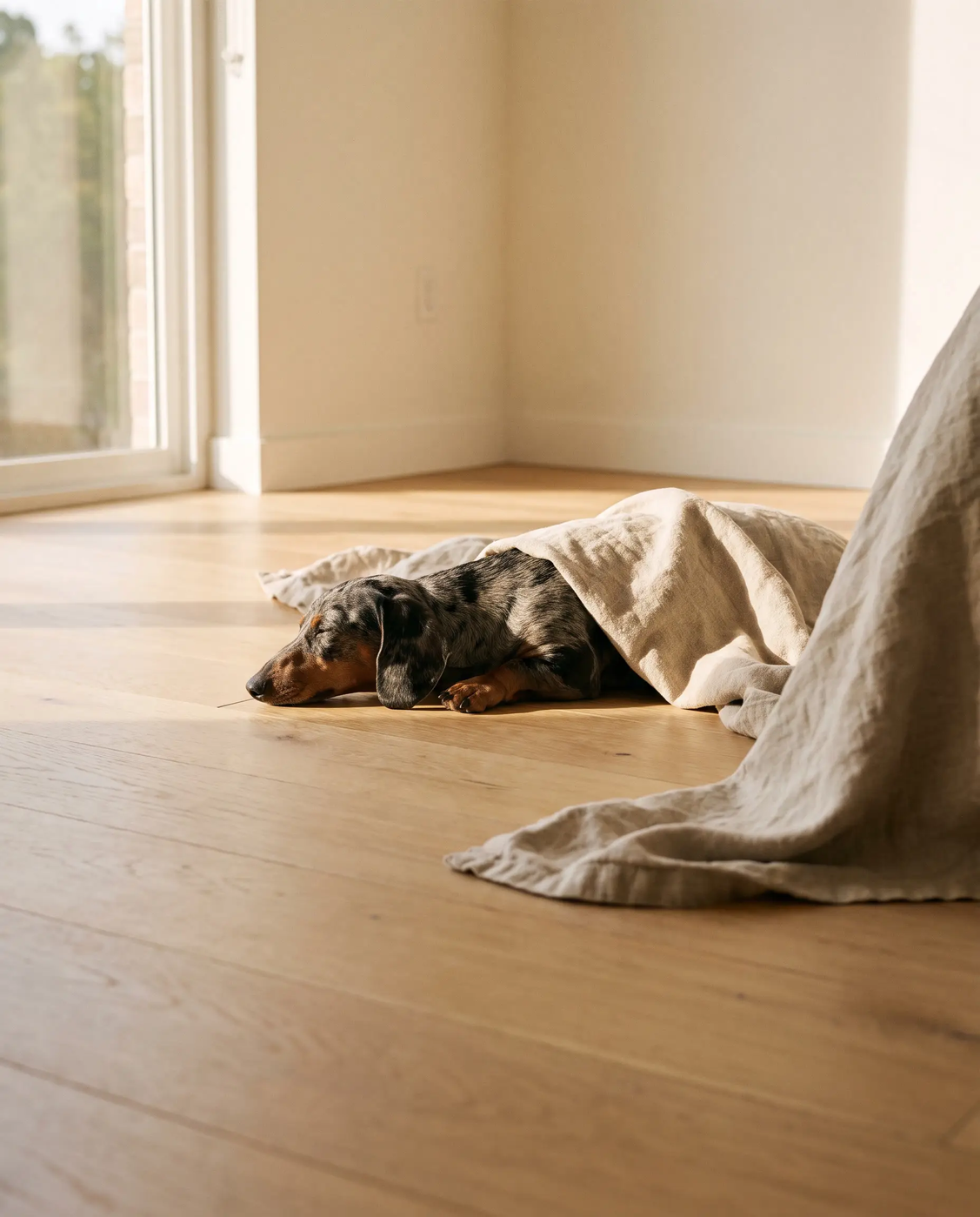
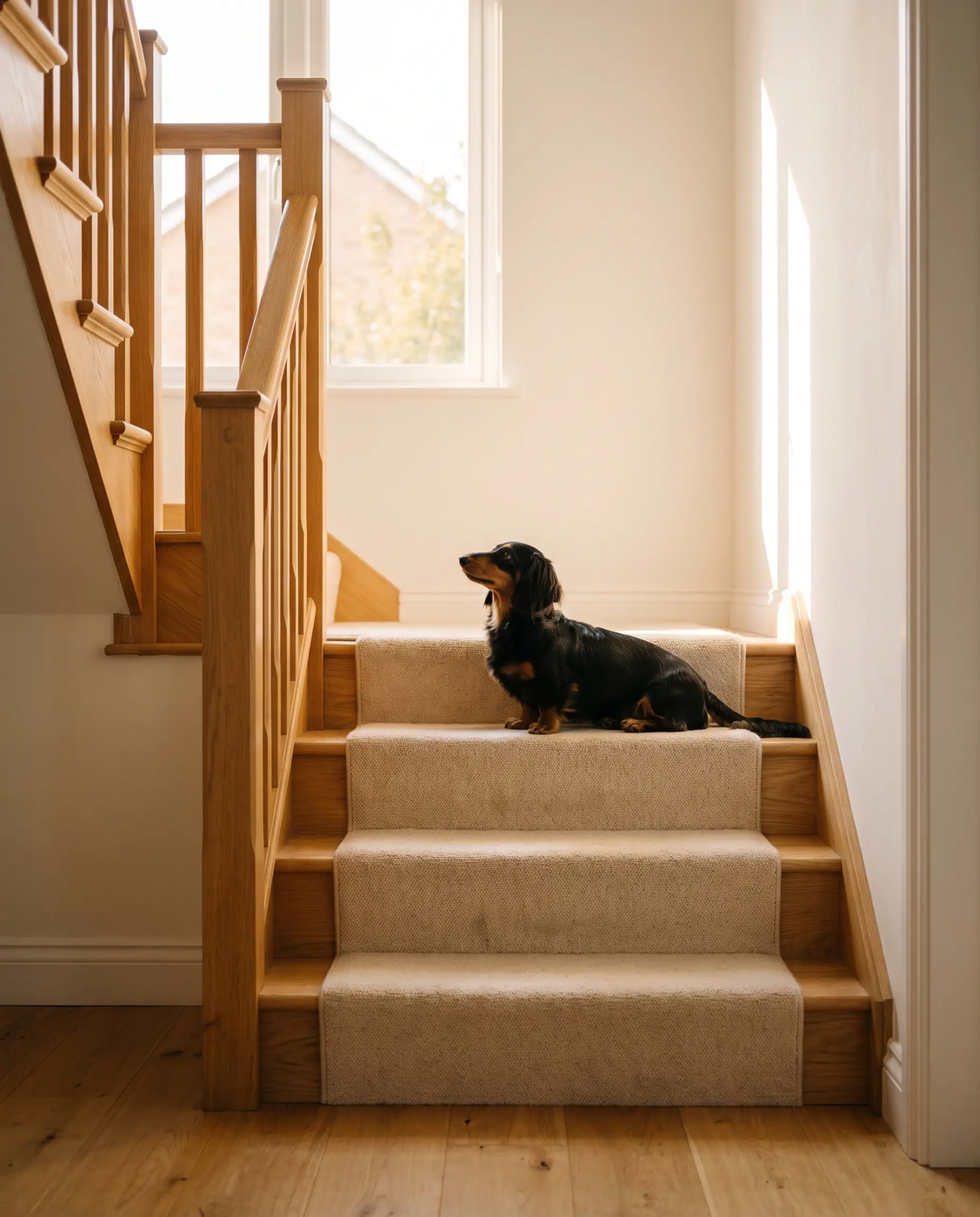
In the JAVMA 2025 analysis of 43,517 dogs (Dog Aging Project, 541 of them dachshunds), regular, controlled stair use was associated with lower IVDD risk, not higher. Not neutral. Lower. Owners who let their dogs use stairs, calmly and routinely, were not the reckless ones the internet imagines.
Owners who let their dogs use stairs, calmly and routinely, were not the reckless ones the internet imagines.
Stairs, couch, bed - every home is a little different. Three questions map the calm setup to your actual layout.
How can that be?
Movement builds muscle, and muscle supports the spine. The same body of research keeps finding that active, well-muscled dachshunds fare better than restricted ones - over-restriction leads to atrophy, and atrophy is its own risk. A dog that walks its stairs every day is, quietly, doing strength work.
So what IS the concern?
The jarring, uncontrolled moments: bounding descents, leaps from the third step, hard landings at the bottom. Short legs are poor shock absorbers - impact lands on the long back. That's a biomechanical concern vets raise consistently, and it's an argument about impact, not about stairs.
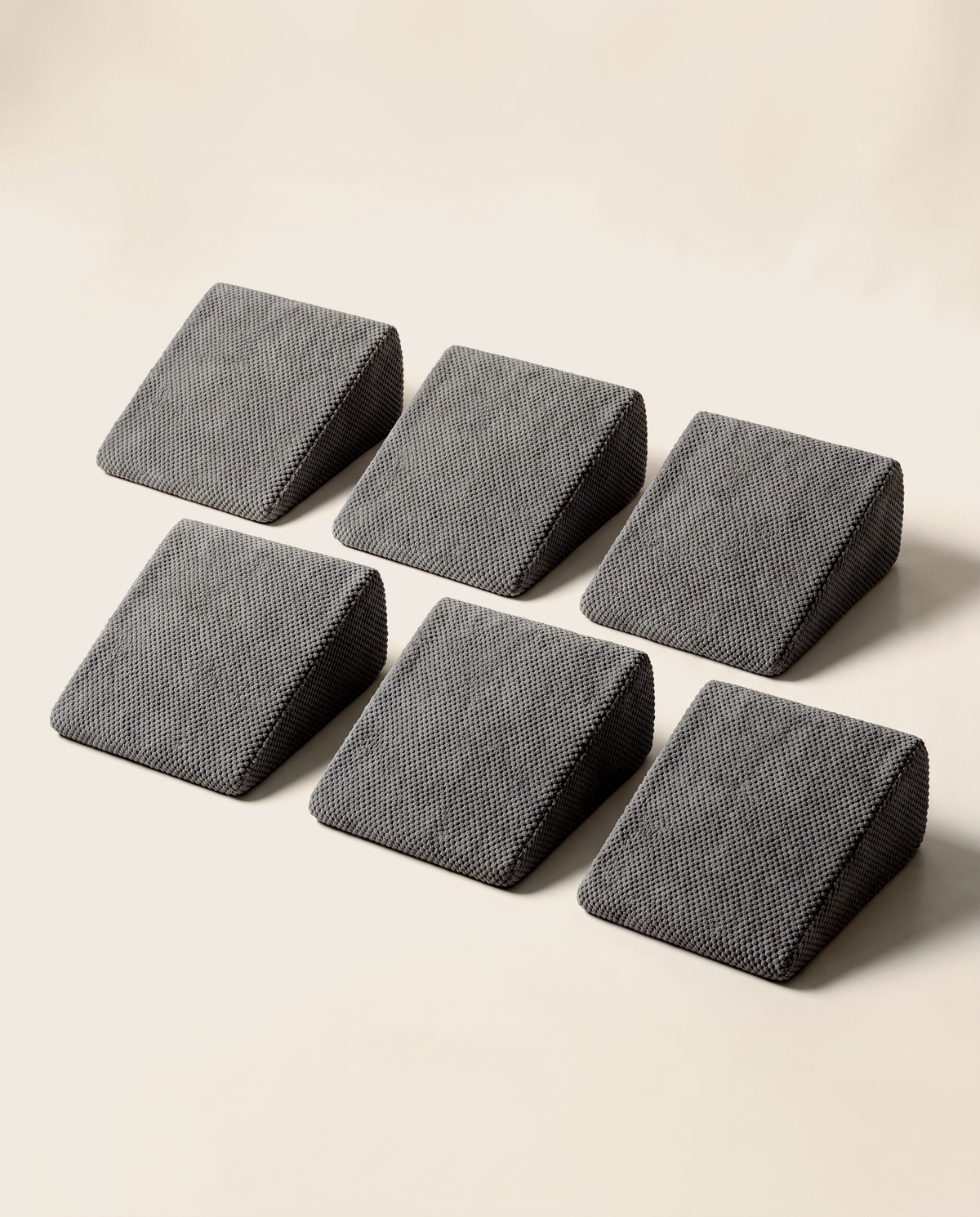
From the range - The Stair Wedges. Ease your steep, human-sized stairs into a gentle, dachshund-friendly grade - the stairs stay, the jarring drop goes.
The practical policy
- Keep the calm, daily stair use. That's the protective pattern in the data, and the muscle it builds supports the spine.
- But ease the grade. Human staircases are built for human legs - for a long, low back they're steep, and a full-speed descent lands hard on poor shock absorbers. That's the job of The Stair Wedges: the stairs your dog uses every day stay - the jarring drop goes.
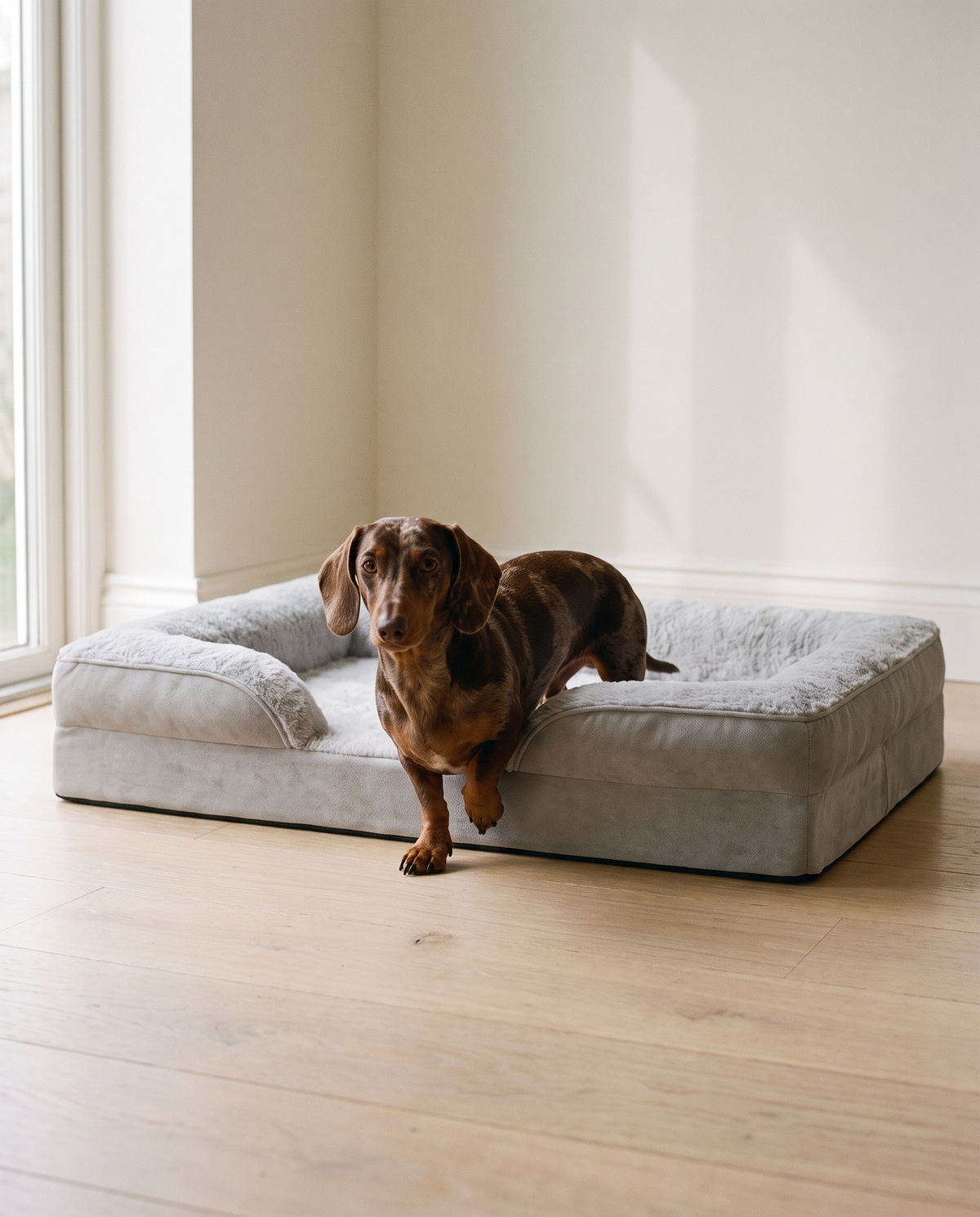
- The real target is the couch-and-bed leap, where the drop is tallest and most repeated. Solve the landing there first - and on a daily staircase, the stair wedges take the drop out of every step while the stairs stay.
Validate the worry; redirect it to where the evidence points. That's the difference between fear and a plan.
Understanding IVDD in dachshunds - the full picture →
Keep reading: Get your dog to actually use the ramp · The real odds
Educational content only - not a substitute for veterinary care. Always consult your veterinarian.