







How we write about IVDD
We sell gear to people who are frightened about their dachshund's back. That makes the way we handle evidence part of the product, so here is the standard, written down.
What we will not say
No product on this site prevents, reduces, treats or cures intervertebral disc disease. Not the stairs, not the wedges, not the harness, not the bed. We do not borrow the category's safety vocabulary either: nothing here is sold as making a back safe, as proofing a dachshund against disc disease, or as clinically proven, because none of those things is true of any object. And we do not hand you a risk score followed by a shopping list.
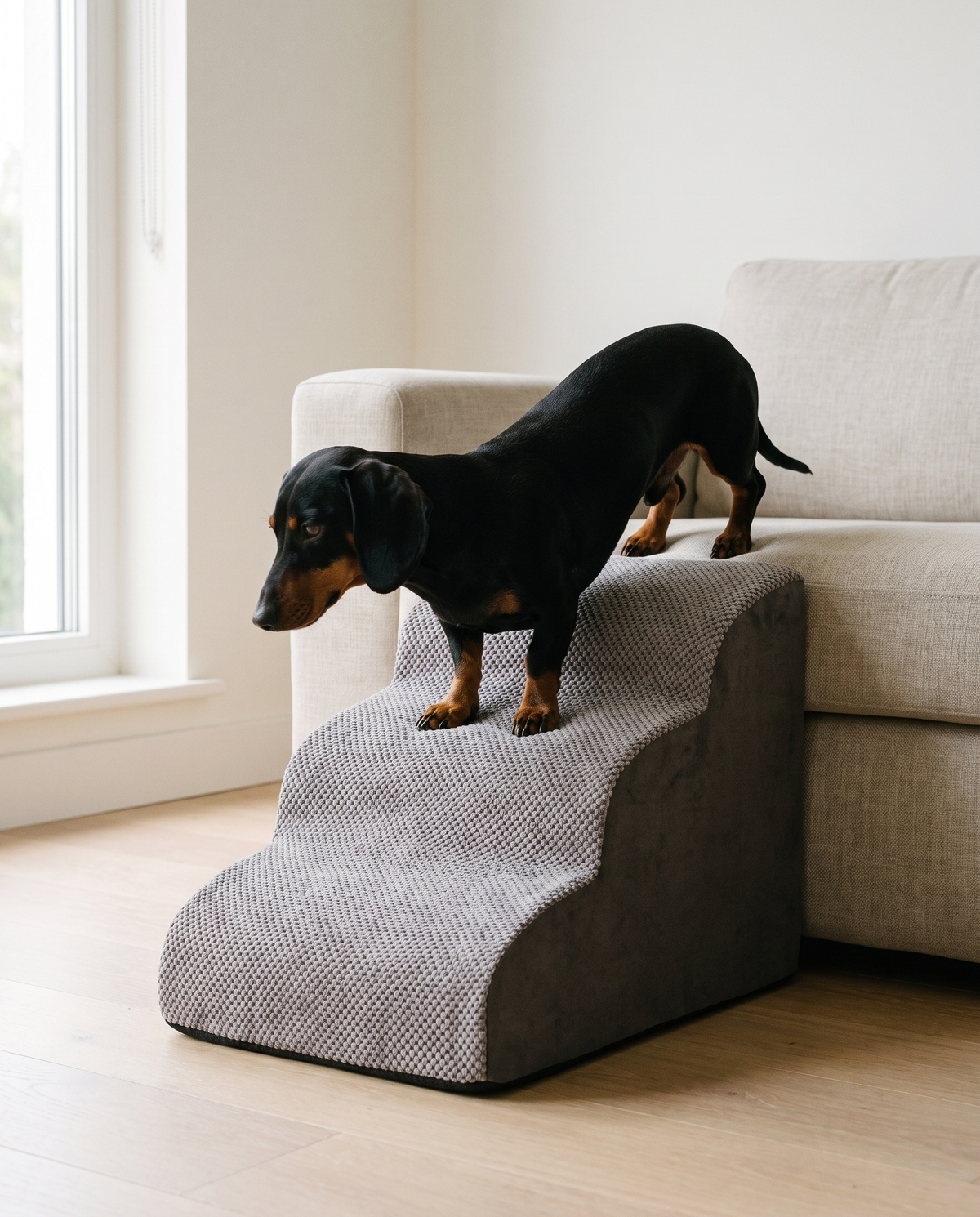
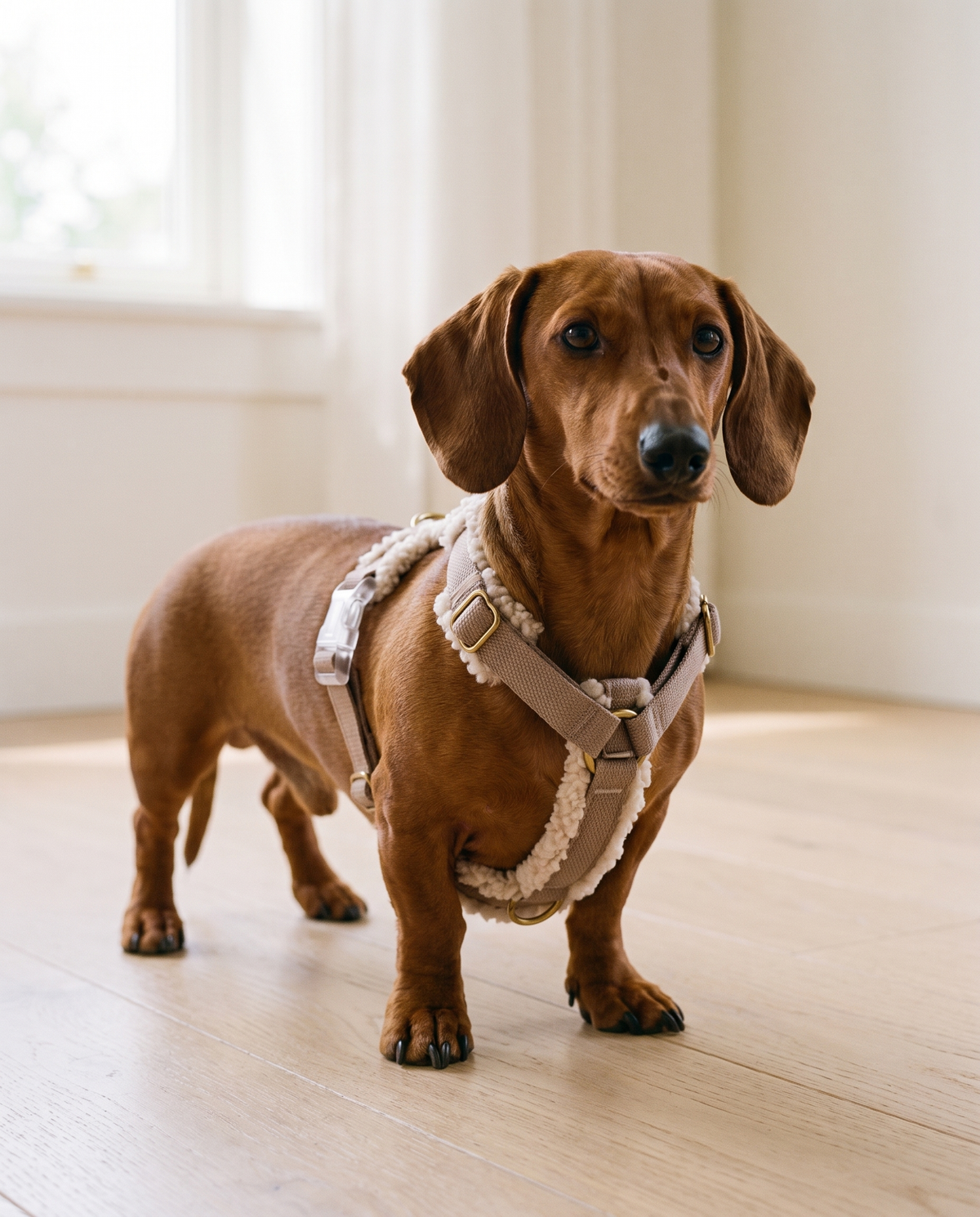
What we do say is what an object does. A ramp changes the height of a landing. A harness changes where a leash pull lands. Those are descriptions, and they are checkable.
Where the numbers come from
Every figure on this site traces to a published paper, and we name it on the page where we use it. The three we lean on most are the Dog Aging Project analysis in JAVMA (2025, 43,517 dogs), the DachsLife owner survey (Packer et al., 2015), and the FGF4 work from Brown et al. (PNAS, 2017).
If we cannot name the paper, we do not print the number. That rule has cost us some good lines.
What we do when the evidence disagrees with us
We change the page, and we say that we changed it.
A worked example, from 20 September 2026. Our own evidence note had recorded that a Y-front harness preserves shoulder extension. Writing the harness guide, we went back to the paper (Lafuente, Provis and Schmalz, Veterinary Record, 2019) and it reports the opposite: the Y-front reduced shoulder extension more than a chest strap did, by 2.6 degrees at a walk and 4.4 at a trot. The note was wrong, so the note was corrected and the phrases it had licensed were banned from our copy.
The same month we pulled a specific odds ratio for stair use out of every page on this site, because we could not reach the paper's own table to confirm the figure. The direction it points is still published here. The number is not, and it will not be until someone has read the table.
Who writes it
Doxie Guard. There is no individual byline, because the pages are written and checked against the sources by the brand rather than authored by one person.
We do not have a veterinarian reviewing this content today. When we do, that person will be named here with the date of their review, and nothing on this page will imply it before then.
What we are not
This is education, not veterinary advice, and none of it substitutes for your own vet. If your dachshund is showing signs of a disc problem, a vet visit is the entire answer and gear is not part of that conversation.